Tips Jar
Tips Jar
Tips Jar

Magick is as natural as the air we breathe and the soil under our feet. It can be used for creation or destruction, and the choice lies with the person wielding it. This energy is not sentient; it does not choose to be malevolent or helpful unless directed in a certain way. Even Baneful Magick and Maleficia have their place in nature.
Contrary to popular belief, they are not singularly used to inflict spiritual or physical harm.
Maleficia, from the Latin word malum (evil/wrong) and facere (to do), is a term often used for workings meant to change another’s physical or social circumstances. In Western esotericism, Maleficia presents itself as any tangible misfortune, illness, or even death.
Maleficia is also referred to as Baneful Magick, otherwise known as “black magic,” and in both Traditional Witchcraft and Western occultism, this type of work can fall into different categories depending on the shape it takes once given purpose.
The etymology of the word itself says plenty. Bane stems from the Old English word bana, which means “destroyer” or “deadly poison”. Baneful magick is classified as such because it introduces poison to a target’s fate. It causes decay and rot to someone who would otherwise be flourishing.
For as long as people have had disagreements, the need to punish or get revenge has followed. While magick is not inherently meant for such purposes, it has become a tool to achieve these ends from antiquity onward.

The Papyri Graecae Magicae (Greek Magical Papyri) is a collection of texts, originating from the Graeco-Roman period of Egypt, containing spells, hymns, formulae, and rituals for both beneficial and baneful purposes. Central to this were the Defixiones, also known as lead curse tablets.
These tablets were inscribed with the target’s name, the intent, and the name of the Chthonic (Underworld) deity the caster is working with. The lead was then pierced with nails, an act which symbolized “pinning down” the target’s soul.
After this ritual was completed, the tablets were then buried in a place associated with the dead, typically a grave or a well. This is done as a way to call upon the spirits of the departed, believed to carry out the task on the caster’s behalf.
One aspect that made the PGM quite unique was the volume of baneful spells it contained. It had rites for summoning daimons to bring about sickness and destruction.
Daimons were also invoked to freeze seas, mutilate one’s foes, and even overturn chariots (Papyri Graecae Magicae VII.429–58). There were also love spells bordering on coercion, creating obsession rather than organic attraction.
The Lesser Key of Solomon, properly titled Lemegeton Clavicula Salomonis, is a grimoire concerned with mysticism, sorcery, and magick.
The Lemegeton, the name many practitioners prefer, is divided into five books: Ars Goetia, Ars Theurgia-Goetia, Ars Paulina, Ars Almadel, and Ars Notoria. This article focuses more on the Ars Goetia, given its relation to baneful magick.

The Ars Goetia details seventy-two demons said to have been summoned and bound by King Solomon. Each of them has unique ranks, powers, legions, and sigils, which can be used in ceremonial magick.
Using the rituals in the grimoire, these infernal energies can be invoked for assistance or knowledge. They can also give wealth and wisdom, as long as they are offered something in return.
During the Renaissance and through the 17th century, the use of grimoires like the Ars Goetia grew in popularity. Major figures in the occult such as Aleister Crowley and S.L. MacGregor positioned it as a form of high-magick, where practitioners harnessed these forces for both protective and baneful workings.
The Grimorium Verum, also known as The True Grimoire, is one of the most notorious books when it comes to baneful magick in the Western Esoteric Tradition.
Unlike its contemporaries, this book is clear when it comes to its purpose: the invocation of infernal spirits to make pacts with them.
Like the Ars Goetia, the Grimorium Verum also organizes the spirit world into a “bureaucratic” hierarchy, with a focus on “The Trinity of Evil”:
Satanachia is named as a chief officer who commands subordinate spirits.
Where the Ars Goetia places emphasis on ceremonial magick, the Grimorium Verum highlights the importance of the Pact. Magick is treated as a transactional relationship between practitioner and spirit, particularly in workings involving coercion, vengeance, or concealment.
The text contains instructions for acquiring wealth and influence, and rituals for vexing enemies while hiding one’s actions. Its Chthonic focus and emphasis on making pacts with infernal powers also place it in the darker aspect of Traditional Witchcraft.
For those who follow Traditional Witchcraft, often referred to by those in the practice as the Crooked Path, magick is neither moral nor immoral. They see power as a neutral energy, abstaining from the belief it is binary.
Their practice operates on the premise that our world is made up of light and shadow. As such, a practitioner worth their salt must also learn how to navigate both.
A witch who cannot hex cannot heal. To truly understand the craft and obtain mastery, it also requires learning about curses.
Refusing baneful magick only limits knowledge and a practitioner’s efficacy. How else will they protect or heal someone from a hex if they cannot grasp how it works?

There’s a saying that justice can prevail only where equality exists and throughout time, we have seen many oppressed people suffer injustices because of their social standing.
In history, witches were rarely people of high social standing. They came from the peasantry and as women, tended to suffer from the prejudices of the time period.
For them, Maleficia became the weapon of the marginalized, exacting justice where the legal system has failed.
Instead of following the Rede, they turned to personal codes of accountability. It was not a matter of karmic law, but simply abiding by the nature of magick: cause and effect.
They acted as a shadow-court, handing down sentences where inequality continued to thrive. If a powerful figure committed an act of violence with impunity, a witch can perform a spell to punish them for it.
For others, it was considered black magic and seen as evil. But for those who wielded it out of need, it was power reclaimed.
In modern applications, practitioners like Strix Sisters still use curses and hexes for a similar purpose.
The Maleficia they perform serves as a tool for justice, defense, protection, and healing. Their work helps others navigate imbalances in their personal and social relationships.
The sisters summon and work with infernal energies, tasking them to deliver karmic consequences to their targets. Yes, there are those who think their work is controversial; some may even call it taboo.
But this judgment is often rooted in fear, brought on by prejudice and misunderstanding.
Working with demons and infernal spirits does not make the act itself evil. Just as magick and power are both neutral, demons can also assist and perform both good and evil tasks.
“Our guidelines for denying a spell are less about the gravity of the request (like wanting death, suffering for the target) and more on managing realistic expectations with the client. Not all baneful spells are meant to be physically malicious, and there are different levels of severity depending on the specific service we offer (jinx, hexes, and curses)”
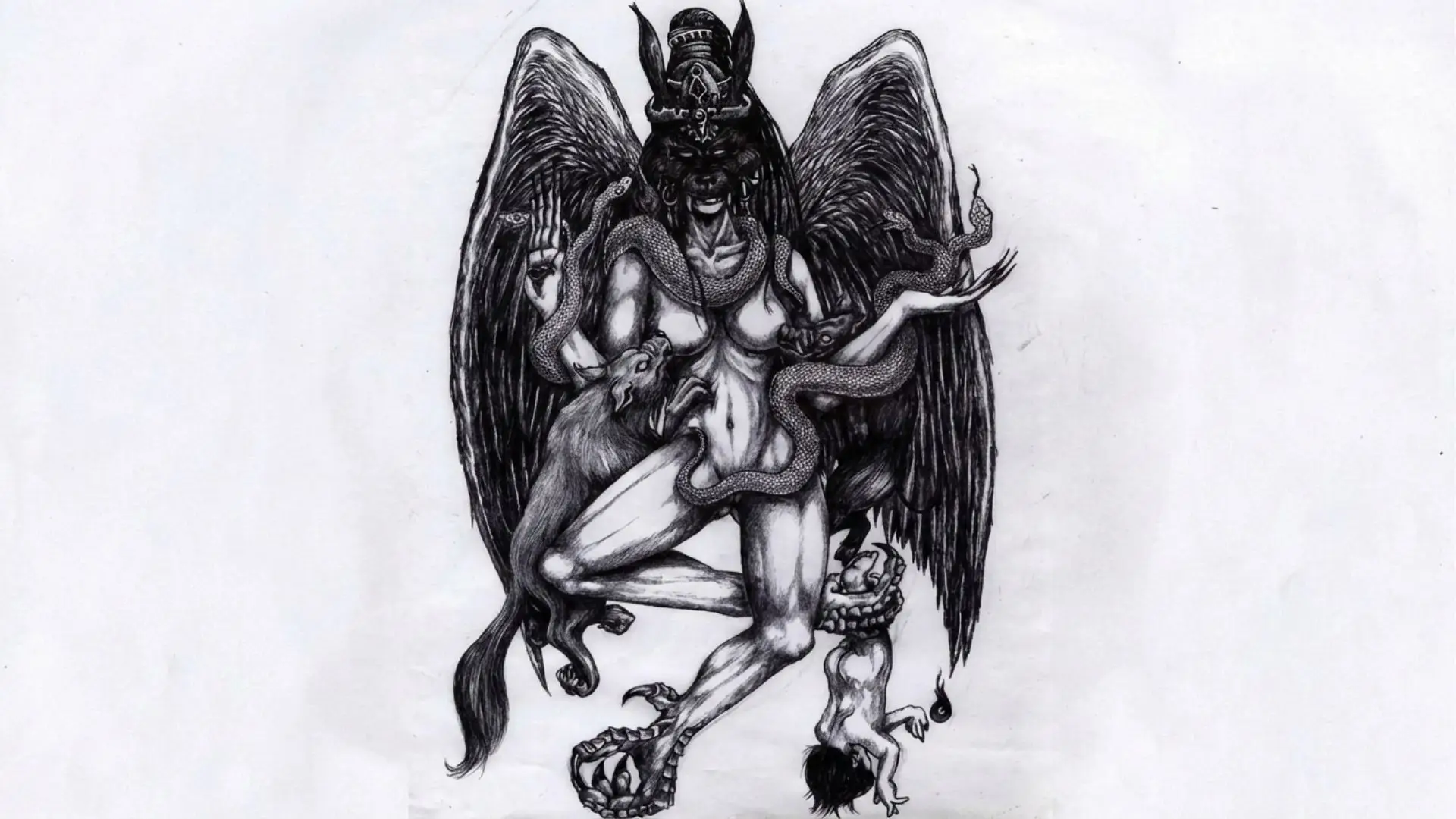
“The 2 main Infernals that we call upon for each working will no doubt be Lord Satan and Mother Lilith, they are the patron and matron of our business, and we work intimately with them in all of our workings. Depending on the spell we also usually call upon Goetic Spirits (Demons) and Chthonic deities like Lady Hekate.”
“Once again, the level of protections required greatly differ on the level of severity of a spell (is it a minor hex that makes both sides of their pillow warm, or is it a generational curse?) and unlike common perception that baneful spells = more protections needed, it is actually a harmful rhetoric that led people to think that non-baneful spells require less protections and therefore they become more careless when they cast non-baneful spells. The reality is whether the spell is baneful or not, spiritual protection and precautions are required for both practitioner and clients and we take this seriously by cleansing, protecting and warding our spaces regularly.”
There are different ways of thinking and different ethical magick approaches when it comes to baneful magick and Maleficia. No one is above the other, so what you choose to follow really depends on the tradition that aligns with your beliefs.

There is a prevalent myth that in order to perform Maleficia, you also need to be a person with darker inclinations. Some suggest that rage is fuel and can help make spells more powerful and potent. However, this myth stems from a misunderstanding of how magickal currents work.
While “blind fury” can amplify the power of your work, in both Traditional Witchcraft and Western Ceremonial Magick, the most effective baneful workings come from impartial detachment. Both lie in the Axis of Gnosis; an altered state of consciousness, where fury uses excitatory/ecstatic gnosis while detachment uses inhibitory gnosis.
The “darkness” needed for Maleficia isn’t a personality trait, but technical discipline. Rather than embodying the dark, one must possess ‘The Cunning,’ characterized by a sharp and calculating mind.
A volatile practitioner is a liability to themselves and their traditions, while a cunning person is a master of their craft.
Some people fear it, others avoid it out of tradition. The simple truth is that Maleficia can be technically demanding, as well as psychologically tasking.
It isn’t something you can just pick up from reading a book. For many practitioners, as with the Strix Sisters, their lived experiences go hand-in-hand with their practice.
True Maleficia is complex, difficult, because it requires you to delve into the shadows of yourself and master it. Discipline and detachment are also key factors; even feeling a spark of guilt or delight when doing it can cause the structure of your spells to weaken.
Ultimately, only you can decide if it’s right for you.


 Tips Jar