

The name Lilith was derived from the Sumerian word LIL, known to mean air, wind, or spirit. It also referred to a class of demons known in Sumerian cosmology as the Lilu; storm demons, which were said to have power over the open desert and its wild, powerful winds.
As the Sumerian culture began to merge with the Akkadian and Babylonian cultures, the name became gendered. Lilu was used for male spirits, while Lilitu was used for females. In Mesopotamian folklore, they were known to be demons that preyed on men, infants, and women. Modern scholars think of them as the earliest ancestors of what we know as the Succubi.
For a period of time, Lilith was not a name that referred to a singular figure. In fact, she did not yet have the form were familiar with today. For the ancients, Lilitu or Ardat-Lili were a type of vengeful ghost, particularly those of young women who had passed without having experienced motherhood or sexual union.
As the stories spread and different cultures became more intertwined, Liliths lore also grew. In Hebrew, the Lilitu were associated with Layil (????) or Laylah (???????), or the night. The Lilitu then became Lilit (?????), merged with a creature from Hebrew folklore that haunted peoples dreams. A night-mare in modern language.
In the Dead Sea Scrolls, the name Lilith is mentioned alongside other terrors that the hymns in the text are meant to ward off. While we see the first example of her name as we know it today, she still exists as a class of evil spirit rather than a singular figure.
“And I, the Sage, declare the grandeur of His radiance in order to frighten and terrify all the spirits of the ravaging angels and the bastard spirits, demons, Lilith, howlers, and [desert dwellers] ” 4Q510, Fragment 1
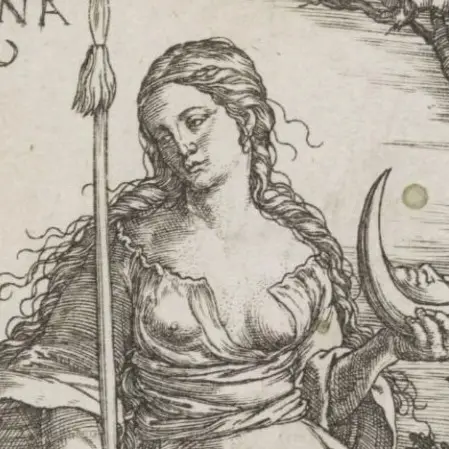
Following the scrolls, we meet her again in the Babylonian Talmud, which is an expansive collection of Jewish law and lore. One of the most distinct things about her mention here is the way they have given her physical and behavioral traits, not just a vague idea of what shes supposed to be. In this text, she is described as a winged-woman with long hair, an image that we still associate with her today.
“Rav Yehuda said that Shmuel said: In the case of a woman who discharges a fetus that has the form of a Lilith, its mother is impure with the impurity of a woman after childbirth, for it is a viable child, but it has wings.” Tractate Niddah 24b
While the Talmud birthed the idea of Lilith being a singular figure and gave us an image to attach to her name, the Alphabet of Ben Sira gave us her origin story. In this medieval text, shes no longer a mere creature of the night. Instead, she is named as the first wife of Adam who resided in Eden with him.
But her story does not end here, in fact, one can say that this is where Lilith, as a powerful figure and symbol, began.
Dates / Feast Days: October 31st (Samhain), Lunar Eclipses, and the New Moon.
Direction(s): Lilith is associated with the North, the direction of Gevurah (Severity or Strength), which is the side of the Tree of Life associated with judgment and restriction. In the Qliphothic (Tree of Death, the shadow version of the Tree of Life), Lilith rules over the first sphere, or the Sphere of Gamaliel.
She is also said to govern the West, which is the direction of sunset and death, also known as the entry to the underworld in both ancient mythology and modern Western occult beliefs.
Planetary Association: The Moon (different from Black Moon Lilith) and Saturn.
Zodiac Association: Lilith is often paired with Scorpio because they share a similar frequency. In both astrology and occultism, they share the same core archetypes of sex, death, power, and the shadow.
Elemental Association(s): Air (Historical/Sumerian) and Earth (Modern/Qliphothic).
Tarot Association: Lilith is known for her role as the “dark feminine”, the guardian of hidden knowledge and the subconscious, which is why she’s often associated with both the Moon and High Priestess cards.
Metal: Silver (Moon) or Lead (Saturn).
Color(s): Black, Red, Deep Purple, Silver.

In modern Luciferianism, Lilith is also known as the “Dark Mother”, the feminine aspect of the Adversary (Satan), who represents liberation and primal instinct. In her role as the Dark Mother or Magna Mater Daemonum, Lilith represents the dark potential of the subconscious mind.
Sometimes referred to as the Womb of the Abyss, Lilith governs over the primal layers of the mind where both creative and destructive ideas emerge from. She is also the Patron of the Shadow or the Shadow Self, assisting people in learning how to harness its potential as fuel for achieving ones goals.
In both modern Qliphothic and Adversarial traditions, Lilith is seen as a single primal force who also reigns over different levels of existence. The Three Liliths represent these aspects of her persona, a trinity of power that makes up the whole.
The Queen of the Qliphoth and the feminine aspect of the Adversary. She is considered the Grandmother of the Lilin, and governs the Great Abyss.
The most active persona in both the material and astral realms. She is the one who governs over sexual alchemy, desire, obsession, and is tasked with testing a practitioner’s will. Many see her as the bridge between the physical world and the demonic one.
The Third Lilith governs the Physical Earth and its pleasures and pains. She is touted as the “Lilith of the Field”, the one who directly engages with the senses of the material world. Depending on the source, she may sometimes be referred to as the sister or daughter of Lilith.
The Alphabet of Ben Sira is considered by many to be one of the most critical texts for Lilith. Not only does the midrashic piece of text give her an origin story, it also introduces her as an actual being rather than a faceless demon.
In this narrative, we are told that it was God who created Lilith from the earth, just as he had created Adam. The pair were harmonious at first, but conflict arose because Lilith refused to lie beneath Adam during sex, seeing both of them as equals and refusing to “serve under him”.
Following this, Adam tried to compel her. Lilith, in response, uttered the Ineffable Name of God (YHWH ???? or the Tetragrammaton). In doing so, she gained the ability to fly and escape the Garden of Eden, freeing herself from Adams control. The story says she later settled by the Red Sea, a place which later became known for being the dwelling of demons.
It is worth noting that in Jewish tradition, knowing how to pronounce the hidden name of their god grants the individual absolute power over reality. Liliths use of it was considered blasphemous and a threat to the patriarchal order of the time. It also made Lilith more dangerous, for it showed that she was no ordinary demoness, but one who also possessed divine and creative power.
This origin story was key to establishing the persona we most associate with Lilith; that of the untamable woman who would choose exile over submission.
In The Zohar, a foundational text of the Jewish Kabbalah, Lilith is not the lone wanderer who chose exile over submission. She is introduced to us as the Queen of the Qliphoth and the female counterpart to Samael, his consort.
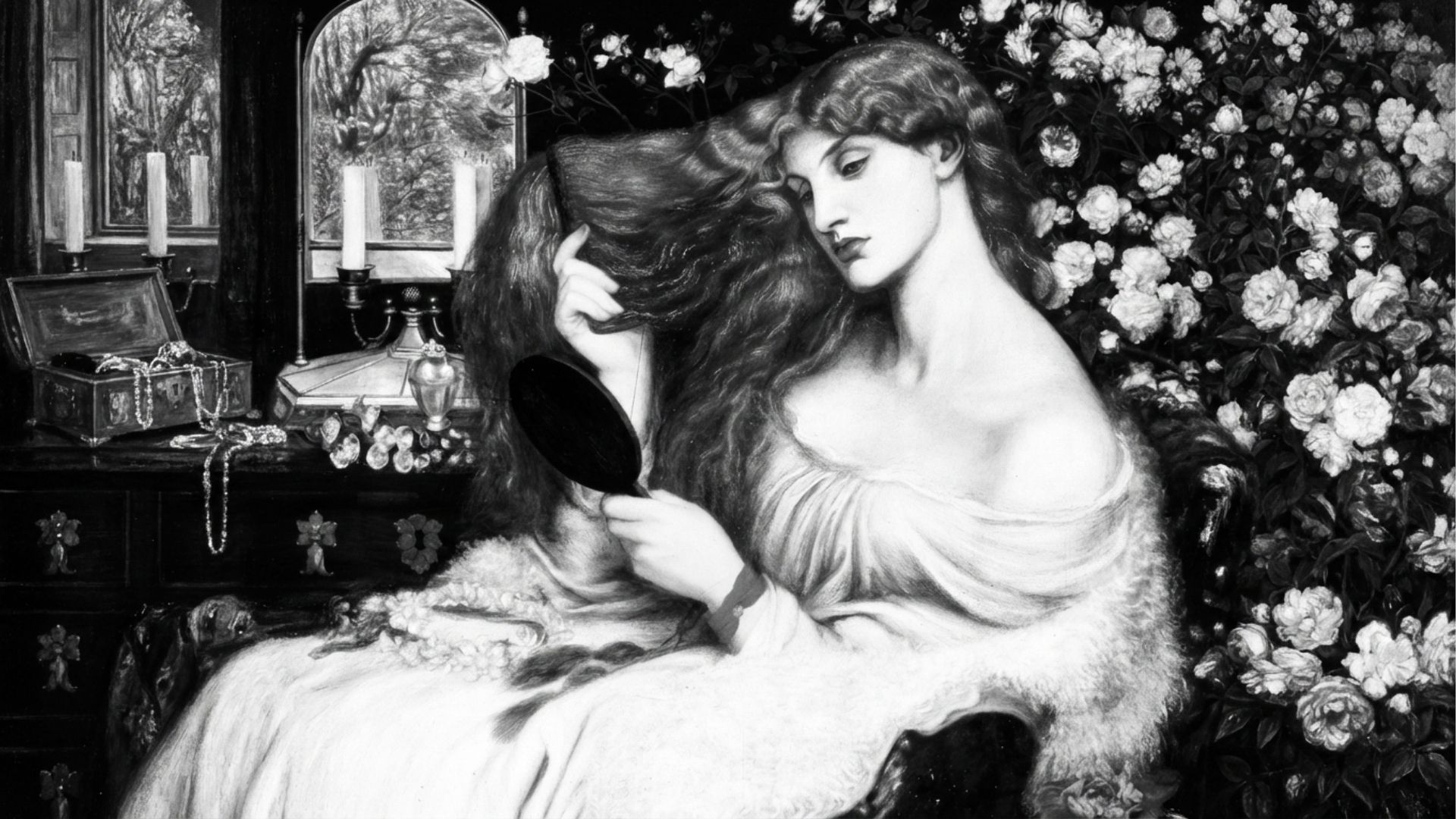
The text also gives us two versions of Lilith. Lilith the Elder, known to be wife to Samael, and Lilith the Younger, who is wife to Asmodeus. The Zohar also describes her as a beautiful woman with long hair and flowing red garments, who seduces men in their sleep. She does this to steal their “sparks” (semen) in order to create more demonic offspring (the Lilin).
With this transformation, she moves beyond being the “runaway bride” and becomes a force of her own. An entity representing the dark realms, as well as the destructive and chaotic aspects of the divine.
This text marks the first instance of Lilith being mentioned in the Western Occult tradition and also marks her introduction to the English-speaking world.
The name “Lilit” can be found in Book 4, a name which Scot associates with the night, as well as the “fay” or woodland spirits that haunt the dark.
He also grouped “Lilit” with Goetic demons such as Belial and Astaroth; demons that can be listed, classified, and even potentially summoned. This led to her being attached to Goetic energies, even though she isnt one.
Despite the fact that his book was meant to debunk superstitions of witchcraft, what it ended up doing is preserving Lilith’s name and image, among others. It ensured that she was not lost to history, so that later occultists like Aleister Crowley would come to know her as a spirit who can be called upon for ceremonial magick.

In the previous historical texts, Lilith was portrayed as the personification of many of the fears people of that time had, such as miscarriages and infertility. She was also depicted as a succubus who preyed on sleeping men, causing perverse dreams and leading them astray.
Modern practitioners view her very differently, however. They treat Lilith as a powerful living spirit and energy, which can help with healing and personal transformation. Here are some examples.
In modern Demonolatry, particularly in S. Connolly’s writings, Lilith is depicted as a Divine Matriarch. She is seen as a source of empowerment, especially for women who are looking for independence.
Connolly also describes her as a protector and a “Teacher of Secrets”. In the Dukante Hierarchy, a classification system used in Demonolatry, Lilith is honored as a Goddess of the “Feminine Divine”.
Instead of the medieval baby-stealing monster she was once portrayed as, modern traditions look to her as a spirit who aids practitioners with embracing their sexualities, setting boundaries, and finding inner strength.
The Lilith we meet in Ford’s writings is darker and more fitting of her “Adversarial” description. Unlike Connolly, he views Lilith through a Zoroastrian and Left-Hand Path lens.
In his books, Ford often merges Lilith with AZ, a Persian demoness known to be the spirit of greed and lust. She is regarded as the “Primal Mother” and the “Womb of the Dragon”.
Similar to older texts, Ford depicts Lilith as the Consort of Samael. In The Bible of the Adversary, their union also produced the beast Chioa. She also maintains her role as the Empress of Gamaliel, helping destroy the weak ego through intense sexual and subconscious imagery.
Appearance-wise, Ford’s texts describe her in various transformations. The Ardat-Lili (a youthful and seductive night spirit), the Lilith-Ghenia (a fearsome mother of monsters), and the Empress of the Abyss.
Lilith’s connection to the Moon is both mythological and astronomical, an interesting aspect to her worth diving into. We’ve covered her association with the moon, so let’s talk about what the Black Moon represents and how it ties in with her lore.
In astrology, Lilith is a mathematical point in space also known as the Black Moon (lunar apogee). This is the point where the Moon is farthest from the Earth. It also symbolizes the shadow self; the parts of ourselves we tend to hide away or feel misunderstood.
Lilith is known to rule over these deep, primal emotions and instincts that our mind often tries to suppress. By working with her, she can teach us how to tap into them and find that hidden power.
In Kabbalistic texts, such as the Zohar, Lilith is connected to the myth of the “diminishing of the moon”. This legend says the Moon originally had its own source of light, but was later reduced to a mere reflection of the sun.
Lilith is seen as the personification of this “fallen” light, or the power that exists even in the dark when the sun isn’t “looking”.

Because Lilith was not part of the Solomonic tradition, there is no ancient sigil that represents her. Also, in the historical sources where Lilith does appear, the symbols used for her were apotropaic images and were meant to ward off and protect people against her.
That said, since the mid-20th century, many modern occultists have designed operative sigils which can be used to connect with her during rituals. Here are some examples.

In S. Connolly’s tradition, Lilith’s sigil was drawn from the Dukante Hierarchy. It is important to keep in mind that this sigil is not meant to bind, but is used to invite her presence. This symbol can often be found inscribed on candles or altars. Some practitioners also use it as a point of concentration whenever practitioners wish to “tune in” to her frequency.

In modern occult practices, this symbol is often used to identify the “Wild Feminine”. Some practitioners draw it on their bodies or inscribe it on altars during the New Moon or Dark Moon phase as a means of connecting with Lilith’s energy. This is often done to channel her influence during introspection and shadow work.

For modern occult practitioners, this is one of the most recognizable sigils for Lilith. First posted on Livejournal back in 2007 by Robin Artisson, it features the monogram LTH representing Liliths name, decorated with a solar cross or a cross pattée (depending on your perspective) at the tips. The design was inspired by ancient grimoires, such as the Goetia, but it is a newer creation that many in the community use for a variety of purposes. It can be found on amulets and in some altars, serving as focal points during rituals.
Despite it not having ancient roots, its widespread use certainly lends the symbol inherent power. In the creators own words,
Lines, shapes, circles, letters, geometry, creativity… All these things are ancient and universal aspects of the world-mind and the human mind. Together with intention, they channel, they create changes. Like all self-engineered magical tools or words, any sigil becomes as powerful for you, if you integrate it into your magical worldview, as any sigil ever used in any time or place.
Disclaimer: The Strix Sisters acknowledge the controversies surrounding the sigils original creator and do not condone or support his views in any way.
I. Satan (Samael)
In Kabbalistic tradition, Lilith and Satan are often referred to as the Two-Headed Dragon. Their union is also considered the “shadow” or “dark” counterpart to God and the Shekhinah (the divine feminine). In Adversarial tradition, Satan represents “thought”, while Lilith is “speech”; making the two inseparable.
II. Asmodeus
In the Zohar, it is established that there are two Liliths: The Younger and The Elder. Lilith the Younger is considered to be the wife of Asmodeus, also known as the King of Lust. While Samael and Lilith the Elder rule over cosmic rebellion, Asmodeus and Lilith the Younger have reign over “earthly” sins such as lust, gambling, and the disruption of marriages.
One of the first things you’ll read about when working with Lilith is her intensity that’s tempered by her motherly aspect. This experience rings true for Priestess Lilin when she first started.
According to her, when she first started the Draconian Path, Lilith came to her during a difficult time in her life. She described the goddess’ personality as demanding, similar to that of a strict mother or a mentor.
As she continued their work together, many of the things she had been suppressing began to surface. From her personality, behavior, even her appearance, which were all hidden away to better fit in with society’s norms.
Before Lilith, she also prioritized being the bigger person over personal integrity as a means of keeping the peace. Choosing to shrink back to avoid conflict or being in the spotlight.
She says of Lilith’s energy,
“Mother Lilith’s energy is not passive (hence why it’s not recommended for new practitioners to immediately work with her), she’s someone who will comfort you and provide motherly love in her own way, but once a serious situation calls for action, she will teach you that the final decision and power must be yours alone.”
While she does not discourage people from seeking out help, the decision should only be yours alone and not influenced by someone else. Lilith will not hold back when it comes to pushing you toward what needs to be done either; her brand of “tough love” is exactly what you might expect.
Priestess Lilin shares an experience, a turning point, when she once faced a legal situation and hesitated on standing up for herself. A fight or flight moment, where she found herself frozen.
In response, Lilith’s energy turned from motherly to “sharp and icy”, similar to trying to breathe in air that’s too cold. A manifestation of the more severe aspect of her personality, such as the one associated with Gevurah.
We’ve talked about Lilith coming to practitioners during significant changes in their lives, often serving as the catalyst for the transformation to happen.
This rings true for Priestess Lilin’s experience, where the goddess left her “alone” for a period of silence. In the process, helping her realize that no spirit or deity can fight for her if she does not acknowledge the situation at hand.
Like the phrase, you can bring a horse to water, but you can’t force the horse to drink.”
Rather than seeing this as abandonment, however, she took action and decided for herself. When she realized how simple it was to stand up for herself to get the justice she needed, Lilith’s presence returned with pride.
The clarity that comes after a period of doing shadow work, leaving you feeling empowered.
Modern practitioners refer to Lilith as a high-intensity entity, so starting a practice with her shouldn’t be taken lightly. Here are some important things to remember before you get started.
Working with Lilith requires both mental and spiritual stability. If you’re unprepared and try to force a connection anyway, the results may not be to your benefit.
A lot of beginners report that Lilith’s arrival tends to coincide with significant changes in their lives. Essentially, the burning of their old life to usher in the new. She is known to trigger sudden life changes, whether that is relationships ending or big shifts in one’s career, meant to thrust people into liberation.
Given this, ask yourself why you are drawn to her. What are you looking for? Is it healing, confidence, or rebellion? Lilith is said to value blind faith and brutal honesty.
To help with this, always do shadow work first. This is because any form of infernal work acts as a kind of mirror. So, if you have any deep-seated trauma, Lilith will surface these. It can be intense, even overwhelming for the unprepared.
As such, always have a grounding or ancestral practice in place as well.
If you’re unsure if working with Lilith is right for you, many in the community say that there are “markers” you can keep an eye out for.
Remember, do not overthink it. Let yourself feel if her presence is there or not.
When preparing to make contact, new practitioners are advised to keep things simple yet respectful. Keep in mind that this is an invitation and not a summoning. Approach her as you would a teacher or a mentor.
The Altar:
Offering:
Lastly, when petitioning Lilith, avoid using commanding language and make sure your intentions are clear.
When working with infernal energies, what you bring to the table will be reflected back to you. If you approach them mockingly, expect to be shown the same in return.
Become A Living God Forum:
Reddit:




2 Comments