Tips Jar
Tips Jar
Tips Jar

The name Beleth is believed to have been derived from the Hebrew word Ba’alath, which means “lady” or “mistress”. It was also the title given to powerful female deities in the ancient Near East, such as Ba’alat Gebal, the patron goddess of Byblos.
If the word sounds familiar, that’s because it’s the feminine form of Ba’al, which is believed to be the linguistic ancestor of the name Bael.
When it comes to translating words and names from one language to another, many things can get lost in the process. This was the case when Ba’alath was adapted for the Greek, Latin, and Middle English medieval grimoires.
The scribes who worked on such texts were not familiar with Hebrew grammar and did not recognize what the suffix “-ath” meant. Over time, as they copied and rewrote, they continued to misspell the name, and eventually created a number of variants such as Bilet, Byleth, and eventually Beleth.
The etymology of his name may point to feminine roots but in medieval texts, such as the Ars Goetia, Beleth is often described as a “mighty and terrible” king.
This shift likely happened because, during that period, many ancient names (particularly those of goddesses) were masculinized to fit the patriarchal military hierarchy of the infernal court. By the time the Goetia was compiled, the name’s Hebrew roots had been lost to history. Later on, he was given the title “King” to reflect his rank in the court.
Dates / Feast Days: May 21st – May 31st
Direction(s): South. Some sources suggest West, but South is common in modern systems.
Planetary Association: Sun
Zodiac Association: 0–10 degrees of Gemini
Elemental Association(s): Earth, though he is traditionally associated with fire energy due to his rank.
Tarot Association: 8 of Swords
Metal: Gold
Color(s): Yellow, Gold, and Red
Plant / Herb: Dill, Peony
Incense / Resin: Frankincense and Dragon’s Blood
Beleth’s rank as king doesn’t just signify immense power. It also points to his significant military strength, which is among the most powerful within the Goetic hierarchy. The demon king commands a total of 85 legions, with anywhere from 5,000 to 6,000 infernal spirits in each one.
In medieval texts, he was also seen as exceptionally dangerous and influential, and he makes sure those who call upon him know it. Practitioners who have summoned Beleth describe his energy as both furious and terrifying.
Johann Weyer’s Pseudomonarchia provides us with a foundation source for Beleth’s appearance. In this historical text, he is introduced as Bileth and is established as a formidable spirit who has immense spiritual and martial power.
Aside from this, the book also emphasizes his complex spiritual history. It places Bileth as a former angel of the Order of Powers, who is said to harbor a hope of returning to the Seventh Throne.
Another significant piece of information given by the book is a warning to all practitioners who seek to invoke him. Weyer warns that the King appears with a “terrifying and furious” demeanor to test a summoner’s resolve. As such, the practitioner must remain brave, for any show of fear can lead to Beleth permanently withholding further contact.
The Ars Goetia is considered to be one of the most famous and widely used occult manuals in the Western tradition. While it borrows and builds upon Weyer’s description of Beleth, it also formalizes his “office” better for practitioners to understand.
In the grimoire, Beleth is categorized as the 13th spirit in the hierarchy. He is also given a specific sigil, which should be worn as a lamen on the practitioner’s chest during invocation. This is a common theme throughout the Goetia, where a spirit’s seal serves as both a “calling card” and a protective talisman for the summoner.
Interestingly, though he is described to be “terrifying and furious”, the Ars Goetia refines his purpose specifically to “cause all the love that may be” until the practitioner is satisfied. This presents a fascinating contrast between his aggressive and intimidating manifestation and the emotional nature of his influence.
Collin de Plancy’s Dictionnaire Infernal draws heavily from older grimoires such as Pseudomonarchia and the Goetia, but it isn’t really meant for practitioners who wish to learn how to work with infernal spirits. Rather, it is a catalogue of spirits made for audiences outside of that sphere who are fascinated by it anyway.
Despite that, his work is an interesting take on Beleth’s office; lending it a “dark romantic” aspect. He focuses on Beleth’s ability to inspire affection and passion in both sexes, which can either be subtle or potent. De Plancy’s “version” of his office is less cold and technical, and more intense and seductive over human emotions.

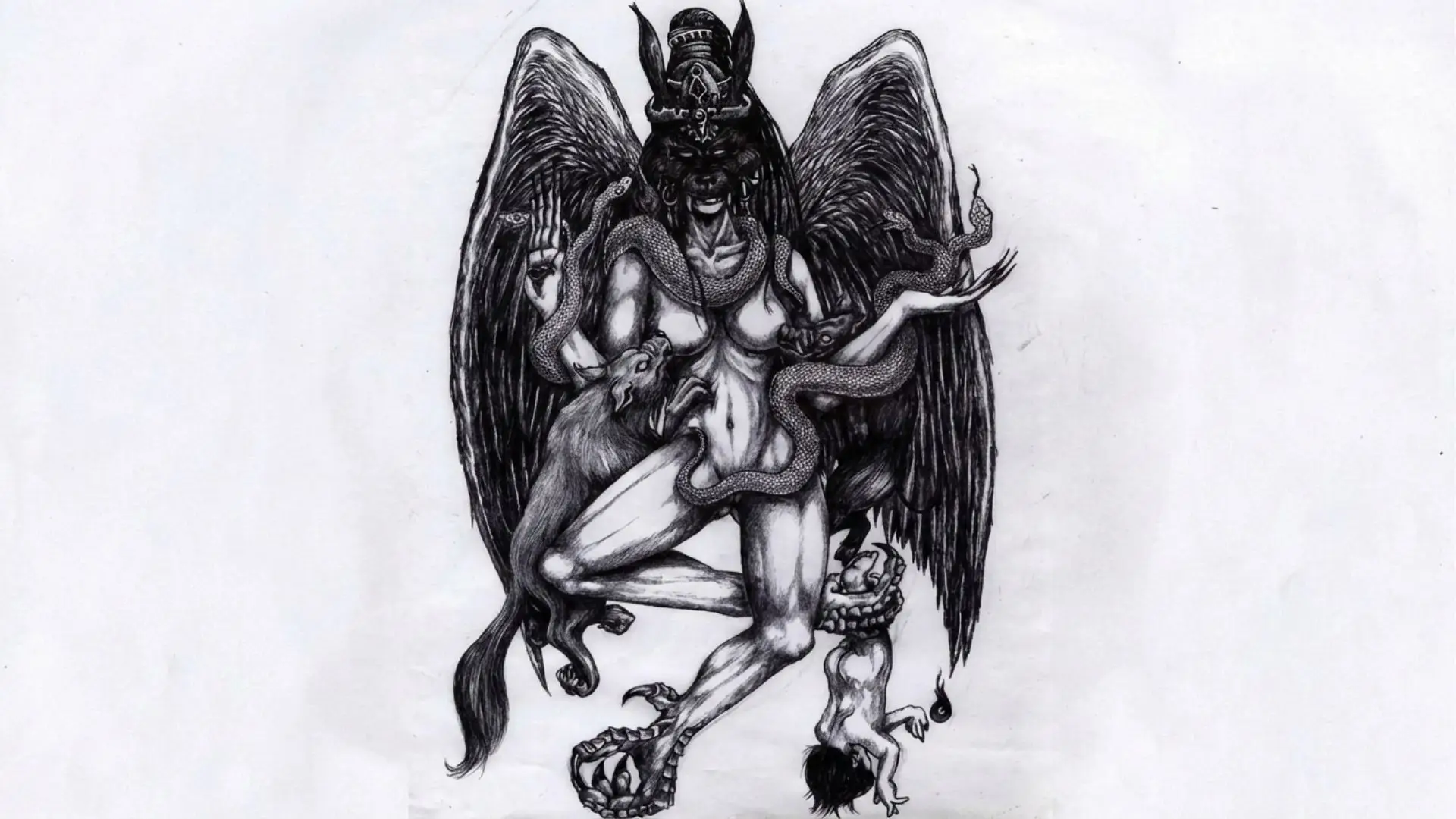
In Weyer’s Pseudomonarchia, Beleth is given a visual that is both striking and eerie in nature. He is described as riding a pale mount and is the only Goetic King described as such. For occultists, this is seen as a link between him and the chthonic/underworld energy of the “pale rider” spoken about in Revelation.
“Beleth is a great king and a terrible, riding on a pale horsse, before whome go trumpets and all kind of musicall instruments. When he is first cited, he appeareth rough and furious, to deceave the exorcist… if he be stubborne, and disdaine to be obedient, the exorcist must proceede couragiouslie.”
Similar to Paimon, Beleth does not travel in solitude. He has an entourage of musicians playing trumpets preceding his arrival. When it comes to appearance, he is said to appear “furious” or “fuming”. This isn’t just for the sake of looks. It is meant to intimidate those who invoke him as a test to see if they are “worth it”.
Beleth’s description in the Ars Goetia retains many of his trademark features from the Pseudomonarchia, such as his mount and the accompaniment of musicians. However, it also adds another degree of danger to the demon king’s appearance.
“He is very furious at his first appearance… and the Exorcist must hold a Silver Ring on the middle finger of his left hand, and keep it close to his face, to keep back the stinking breath of the spirit.”
The text mentions Beleth’s “fuming breath” which is described as having a physical stench or a “burning” quality to it. Summoners are said to wear or hold a silver ring to their faces to provide both a literal and symbolic barrier against it.
In modern demonolatry, the “furious demon” imagery often found in older grimoires is transformed completely. This is because within this tradition, demons are seen as divine energies rather than “monstrous”.
In S. Connolly’s work, instead of appearing on a physical horse, Beleth is described as more of an intense and weighted energy. He is said to have a “red” vibration, primal and fierce—a color that feels apt when it comes to his office and ability to “cause all the love that may be.”
When it comes to his energy, it is said to be ancient yet grounding. S. Connolly describes him as retaining a high-frequency vibration, a kind of scorching heat that can be uncomfortable or overwhelming for those who are unprepared.


The sigil assigned to Beleth is one of the more distinctive seals in the Ars Goetia. Many practitioners see the structure of his seal as symbolic of his throne or chariot, which speaks to his royal status.
The sigil also has a “cage-like” design, one that is more complex when compared to simpler seals. This style is believed to align with his “furious” and “stubborn” nature, thus the need for a stronger seal to “allay his courage” or “calm” his ferocity.
Some people tend to mistake Beleth for Asmodeus given the similarity of their office. Both deal with lust and desire; however, Asmodeus is more carnal, while Beleth is more emotional/relational.
Sitri, the twelfth demon in the Ars Goetia, is also a spirit who governs love and lust. Though their offices are similar in function, they are different entities. Some practitioners also say that Sitri is less intimidating than Beleth and more approachable for beginners.
Beleth, Paimon, Bael, and Purson are referred to as the “inner circle”. As kings, they are among the highest ranked and command a great legion of spirits under their banner. Specifically, with Paimon and Purson, Beleth is also part of the aptly named “Musical Kings”.
The three of them share a similarity in how they arrive, heralded by the sound of trumpets/bells and accompanied by an entourage. However, Beleth’s arrival is unique in the sense that he manifests with a single, overwhelmingly loud trumpet blast first.
For new practitioners looking to work with Beleth, there are a number of important things to keep in mind. As he is one of the few infernal spirits described as “intimidating” and “hostile,” working with him requires extreme formality and unshakable confidence.
For new practitioners looking to work with Beleth, there are a number of important things to keep in mind. As he is one of the few infernal spirits described as “intimidating” and “hostile,” here is a guide to help you prepare.
1. The Courage Test
Beleth’s “rough” and “furious” appearance isn’t just him posturing. Take it as a challenge and show him no fear, but don’t be arrogant about it. Confidence, bravery, and respect all go hand-in-hand if you wish to work with him as your teacher.
Many practitioners report the King intimidating them through loud noises, a heavy atmosphere, and even a terrifying appearance. Any hint of hesitation can lead to your petition getting ignored or him becoming stubborn.
Always use Beleth’s Enn: “Lirach tasa vefa wehl Beleth” when invoking him. Make sure you address him by his title and always be sincere about your approach.
2. Treat Him According to His Title
Think about it this way: humility does not equal being a doormat.
If you wish to earn an audience with Beleth, finding the balance between respect and fear is key. However, how you speak and interact with him also matters. Treat every interaction like an audience with a great king of old. You are the host and he is the guest of honor.
Don’t beg. Infernal Kings will not give you what you wish for just because you asked. Pleading with them will not work. Instead, always state your intention with clarity and give them your offerings upfront. Don’t play mind games and be honest about what you’re asking for.
3. The Silver Ring Ritual
Historically, silver has always been seen as a kind of barrier that can protect people from entities such as faes, vampires, and so on. When used during a ritual involving Beleth, there are two interpretations to consider: the Ars Goetia version says the ring protects you from Beleth’s breath, and the modern tradition uses it as a symbol of mutual respect.
Experienced practitioners suggest wearing a silver ring on the left middle finger during rituals to “signal” to Beleth that you have done your research and respect all the protocols of his office. It will also serve as a buffer for his intense energy.
4. Offerings for Beleth
5. Working With Beleth’s Abilities and Power
Understand that Beleth’s power over love isn’t ‘sweet’ or intended for casual dating. Practitioners describe his influence as ‘doting love’ or even obsession.
If you seek his help to make someone fall for you, prepare for things to become intense. Beleth’s brand of love can become deep and all-consuming if you are unprepared for your own wishes.
If you feel called or ready for a first invocation, here’s a quick checklist of what to prepare:
As a final note, many practitioners say that Beleth is like a mirror. He will reflect back the energy you approach him with. So, if you come to him with chaos and fear, you will be given the same.
Approach him with the same dignity you expect from him. If you earn his respect and allyship, he is one of the most loyal and effective mentors in the Goetia.
Become A Living God:
Reddit:


 Tips Jar