The names of great demon kings and infernal spirits don’t always have a singular etymology. As such, they take on different personas as time goes on. This is also true for Belial, whose lore can be traced through the early beginnings of his name.
A popularly accepted interpretation for Belial’s name is that it comes from the Hebrew words Beli (without) and Ol (yoke). Back in ancient times, a “yoke” referred to a wooden beam that was used to control oxen. As such, it also symbolized submission to a master or a god.
To be “without a yoke,” as hinted by Beli Ol, used to be an insult, as it implied that the person was wild or lawless. Feral, in more modern thinking. Today, however, practitioners have reclaimed it to represent true liberation and the refusal to bow down to any external authority.
There is another interpretation of Belial’s name, one that comes from an academic and biblical point of view. Scholars from this field suggest that his name comes from Beli (without) and Ya’al (to be of use or value). Translated, it means “The Worthless One” or “One of No Profit”.
Spiritually speaking, it also mirrors Belial’s core role in shadow work. He is the energy that forces a practitioner to confront the parts of their lives that feel “worthless” or “stagnant”, leading them to cut these away in order to build something stronger.
Belial is considered the king of the “unprofitable”, yes, but these are also the outcasts and rebels who refuse to be used by others and the system. So, while society may deem them as having no value, this does not affect their internal worth. Such is the lesson that the demon king teaches.
Lastly, we have a third more chthonic-based (underworld) interpretation, which links the name Beli (without) and Alah (to ascend). Translated literally, it means “Never to Rise,” and characterizes Belial as a spirit of the abyss.
Unlike other spirits, such as Mother Lilith, who are associated with the sky or the air, this interpretation explains why Belial is considered to be the King of the Earth element. He is the representation of the dense reality of our physical world and all of the secrets buried deep within it.
Why does Belial have two conflicting elements?
This is because in the Goetia, Kings represented the highest authority. As such, they are associated with the Sun or solar/fire energy, hinting at their status as the “king of the day/sky”.
This shifted when it came to modern interpretations because practitioners looked more at Belial’s character rather than just his rank.
They say that “one must master the earth before ascending,” which is linked to doing shadow work on the self. Belial symbolizes discipline, responsibilities, harsh truth, and our deepest insecurities. To work with him is to be grounded, hence his association with Earth energy.
When it comes to Tarot cards, Belial’s association with The Devil and 4 of Pentacles is interesting to note because it highlights two distinct aspects of his nature: the ultimate rebel and the master of the material world.
To put it in plainer terms, think of it this way. The Devil card represents his spirit, while the 4 of Pentacles is his office.
Many practitioners treat Belial as a high-stakes spirit, which means caution must always be exercised when working with him. This isn’t just because of his rank as king; it’s also because of his status as the “second-born” of creation.
According to the Ars Goetia, Belial was created right after Lucifer. If we consider the hierarchy of celestial beings, this means he is one of the “primordial spirits”. In this sense, Lucifer can be seen as the “First Light,” while Belial is the “First Shadow.”
Since he was amongst the first to be created, Belial’s power is also seen as foundational. He does not have a specific “niche”, but his power encompasses a broader elemental force that helped shape the laws of both spiritual and physical worlds.
The same text also states that Belial fell “among the worthier and wiser sort,” which is a way of saying that he was an elite angel. Though not specified, scholars and practitioners alike believe that he was likely of the order of Virtues or Cherubim.
It should also be noted that he didn’t just follow Lucifer, despite the common view of them being two sides of the same coin. Belial was one of the primary architects of the rebellion.
Aside from his significant power, his age also equals authority, especially when it comes to Goetic tradition. Because he was there at the beginning of the “Great Divide”, he also holds a seat at the infernal hierarchy’s highest table. He does not answer to many and it is said that even other Kings look to him for his ancient wisdom.
Let’s start with one of the oldest sources on our list: the Dead Sea Scrolls. They are said to contain not just the oldest but also the most “intense” descriptions of Belial. In them, he’s not just a demon; he is the Cosmic Antagonist.
The War Scroll
As the name suggests, this tells of an apocalyptic battle between the “Sons of Light” led by Archangel Michael and the “Sons of Darkness” led by Belial. The text calls Belial the angel of hostility and the ruler of this world. He is said to have been created by God specifically to “serve” as the “Angel of Malevolence”.
Scholars and occultists alike suggest that this is where the idea of Belial as a Master of Lawlessness may have originated. In the scrolls, he represents the shadows and becomes the necessary opposition to the divine light.
If you’re encountering this text for the first time, it is important to understand that it was never intended to be an occult manual. Instead, it was meant to show the falseness of the demonic hierarchy. However, it served the exact opposite purpose and became a resource for later occult texts such as the Ars Goetia.
In Pseudomonarchia, Belial is listed as a powerful king who was created after Lucifer. Johann Weyer, the book’s author, notes that Belial was the “vessel of all iniquity (immoral/lawless)”. Despite this, however, he is described as a beautiful angel; creating quite the contrast.
Weyer is also among the first to highlight that Belial is a master of deception. In his book, he explicitly states that if a practitioner does not offer the demon king “sacrifices and burnt offerings” he will never tell them the truth.
The Ars Goetia, the first book of The Lesser Key of Solomon, is considered by many practitioners today to be the standard. It built upon the descriptions provided by the Pseudomonarchia and turned it into a manual for summoning infernal energies.
In this text, Belial is given a rank. He is the 68th spirit out of the 72 in the Goetic hierarchy. The book also gives him a specific seal, a kind of calling card, which is required if you seek to summon or connect with his energy.
One key difference here, a very important one, is his shift from an evil entity who only seeks to cause harm to one who can assist practitioners in a number of different tasks. According to the text, he is capable of creating both friendships and enmities for those who seek him, along with high-level corporate promotions and even political positions.
This source also explains why modern practitioners deeply associate him with material gain, social status, and legal power.

In classical texts such as the Ars Goetia and the Pseudomonarchia, Belial does not appear as a horned creature. He is described as two beautiful angels sitting in a chariot of fire.
“The Sixty-eighth Spirit is Belial. He is a Mighty and a Powerful King, and was created next after LUCIFER. He appeareth in the Form of Two Beautiful Angels sitting in a Chariot of Fire. He speaketh with a comely voice, and declareth that he fell first amongst the worthier sort, that were before Michael, and other Heavenly Angels.” — Ars Goetia
Do not be fooled, however. His appearance is still meant to be disarming. By manifesting as graceful angels and speaking in a pleasant and persuasive voice, he is asserting natural authority. It tells us that he does not need to frighten in order to dominate; he just does.
Despite being depicted as a vision of beauty, these texts also never fail to warn practitioners against his mastery of deception. In modern speak, think of him as a “lawyer-type” who will look for loopholes and try to bend rules according to his will. He also requires “payment”, but not out of ego. It is simply part of a formal contract with him.
In modern demonolatry, Belial has no true physical manifestation. Instead, he is experienced as a force of nature. There is no chariot, but a practitioner may feel a heaviness in the room or smell the scent of damp earth or patchouli whenever he is present.
Another significant step away from classical texts is the role he takes. In the previous examples, he is presented as beautiful yet dangerous. An entity one must bargain with.
This differs from modern demonolatry traditions where Belial is seen as the “Dark Father”, someone capable of teaching those who seek him how to stand on their own two feet. He doesn’t just give you the title or position you want, he helps you build from the ground up. The character, the discipline, all of the tools you need to earn it.
Modern demonolatry presents Belial as a mentor, but in Luciferian Witchcraft, he takes on a more adversarial role.
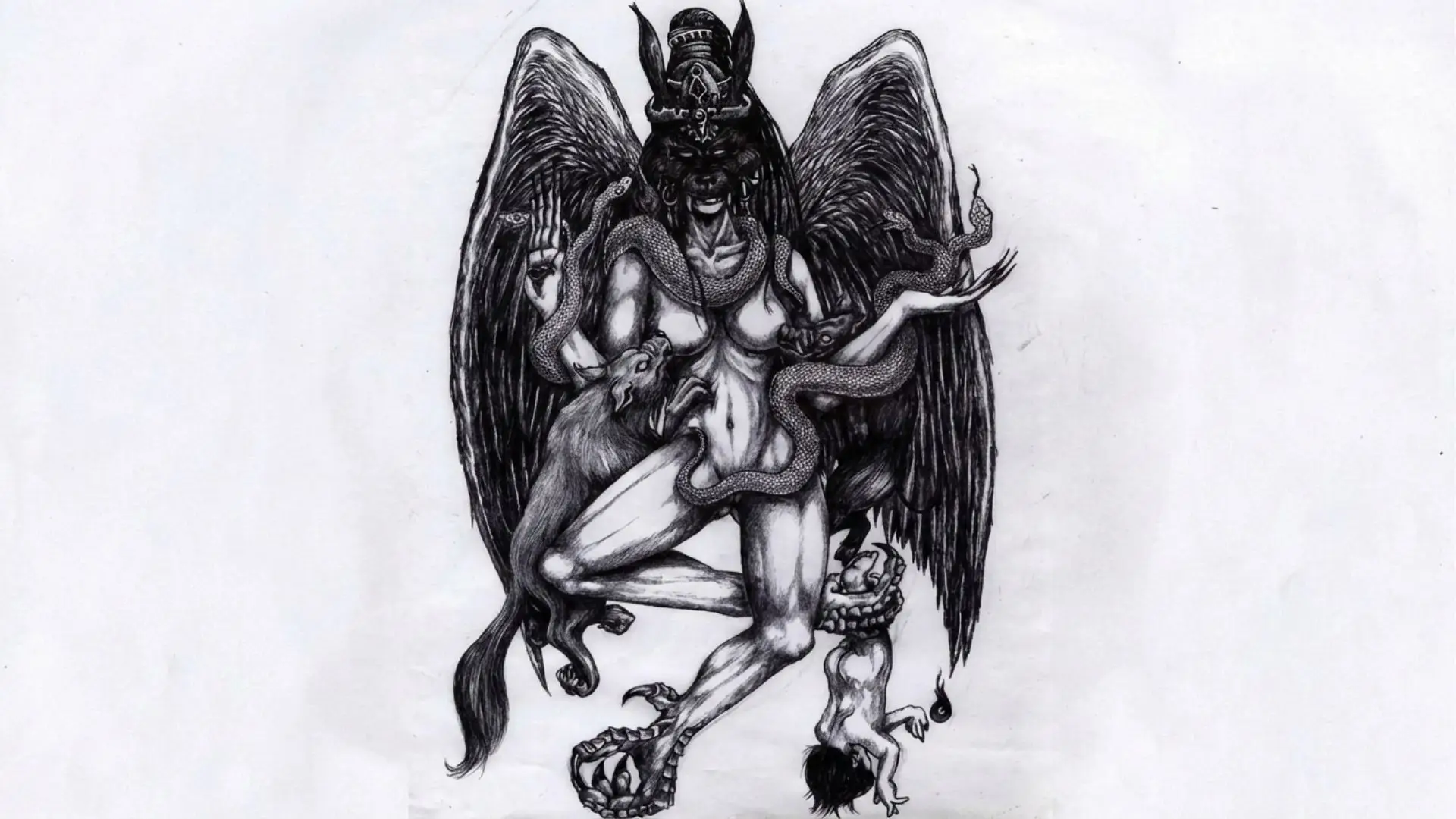
In Ford’s writing, he is described as the Lord of the Earth and is often linked with the “Black Sun”. In illustrations Ford has sanctioned, particularly those by Nestor Avalos, he is depicted as a crowned, chthonic, sometimes skeletal figure.
For practitioners who seek to follow in his path, he is said to test each one. He initiates changes through conflict. This could appear as obstacles that practitioners will need to destroy in order to be seen as worthy.
In the end, all of their weaknesses would have been burned away, leaving someone without a master other than their own selves.

Aside from the above, King Belial is also known as the King of Loopholes. Just like a real lawyer, he can help practitioners navigate rules and even “bend” them to suit their goals.
A sigil isn’t just a symbol; it is also considered a gateway or a means of calling the spirit a practitioner wishes to work with. It is unique to each spirit and in Belial’s case, there are two primary ones used today.

The traditional seal used for the demon king comes with sharp angles, which are said to represent both the legalistic and intellectual nature of Goetic spirits.
Practitioners use this seal when they want to appeal to his King/Diplomat aspect, particularly for winning court cases and career advancements.

For practitioners who follow modern demonolatry, this is the sigil they use. Because Belial is the King of Earth, his sigil represents his connection to the soil and the deep abyss.
While the Goetic sigil looks akin to a key, the Dukante one has the appearance of a root. It is said to symbolize his role in helping practitioners be more grounded to support their growth.
For those who seek his mentorship when it comes to shadow work, self-mastery, and elemental magic, this is the sigil to use. It is also seen as better for meditation and building a teacher and student relationship with him.
We can’t talk about Belial without mentioning the Four Crown Princes of Hell. Lucifer (Air), Belial (Earth), Leviathan (Water), and Azazel (Fire/Desert). Together, they form a “complete human experience”.
Lucifer provides the spark of intellect (the idea), Leviathan governs the emotional depth and intuition needed for it, Azazel provides the transformative fire of human will (the push), and Belial is the one who manifests these combined forces into the physical world.
Paimon and Belial share similar offices (jobs) when it comes to the Goetia. Both hold the rank of kings, both command a significant legion of spirits, and both are able to grant “titles and dignities” to those they deem fit.
The distinct difference between them is in the manner in which they assist a practitioner. Paimon can teach you how to master a craft, while Belial will influence (sometimes force) the physical world to recognize your mastery. Needless to say, Belial has a more heavy-handed manner compared to Paimon.
For many practitioners who have worked with Belial, it can be a life-changing experience. It is not because he will grant your heart’s desire instantly, but because his energy can actually help pull your life into proper alignment.
Yes, the idea of him knocking everything down so you may rebuild properly can be scary, but it is what is necessary to take you to the next level. Belial can show you cracks in the foundation and give you what you need to build something far more durable.
If you feel called and ready, here are some tips and advice on how to work with Belial.
1. Physical Preparation
Clean your space and yourself. This is a non-negotiable when it comes to Belial. A cluttered space reflects a cluttered mind, so make sure you clean up. Another important thing is to shower and wear clean clothes. It doesn’t have to be ritual-specific, but opt for ones that make you feel empowered.
Some practitioners also fast for 6 to 12 hours before initiating contact. If you do eat, stick to “clean” foods and do not drink anything alcoholic. Belial requires an alert and sober mind, so you can properly navigate any contracts you may be making.
2. Preparing An Altar and Offerings for Belial
The Altar: Aside from cleaning your space, pay attention to the altar as well. It doesn’t have to be fancy, but there should be a certain weight to it. Practitioners suggest using black cloth and gold accents. You can also incorporate a bowl of fresh soil, some large stones (tiger’s eye or obsidian works best), and other heavy metals such as brass or gold.
Don’t forget to use Belial’s Enn: Lirach Tasa Vefa Wehlc Belial. This should be chanted in a low and resonant tone. Take your time finding the right sound that feels comfortable for you.
The Offerings: Belial is transactional, but he doesn’t want mere scraps. While traditional offerings work, his most requested payments include tokens of your success.
What does this mean? In terms of success, giving him public credit is one example. A post praising him, whether it be on social media or a forum, can also help expand his influence in the material world.
It’s worth noting that in the Goetia, Belial demands sacrifices and burnt offerings. Many modern practitioners have interpreted this as burning away bad habits in his name or making a significant sacrifice to show him your discipline and commitment.
If you want to add physical offerings to your altar, he is said to prefer aged whiskey, deep red wine, or bourbon. You can also opt to bury a high-value coin in his altar bowl or in a dedicated outdoor spot. This act symbolizes your trust in him to grow your financial wealth.
It can be said that working with any infernal spirit can be daunting. A practitioner must be prepared mentally, not just physically, in order to not feel overwhelmed during the process.
This is particularly true for Belial, who is known to “shake up” the very foundations of a practitioner’s old life to make way for the new.
Consider this the most important piece of advice when it comes to seeking mentorship or assistance from infernal spirits. Most practitioners make the mistake of begging and acting desperate, believing this would make them more persuasive. However, it often results in the opposite.
Belial is known to “break” practitioners who approach him with a beggar’s or victim’s mindset. Instead, show him what you’re willing to do to achieve your goals. Offer him your commitment and discipline, or show him the ways you’ve been liberating yourself from old and bad habits. In doing so, you may gain his respect.
Don’t think of big changes in your life as punishment from him. Instead, try and see it from his perspective. He is pruning you and removing things in your life that were holding you back.
This goes without saying. When petitioning him, speak as you would with someone who has a higher seniority or ranking than you. Lastly, always state your intentions clearly.
Belial may be one of the most intimidating figures in the demonic hierarchy, but there is also much to learn when working with him. If you feel as if you’ve outgrown your current life and you’re yearning for what comes next, but have no clue how to get started, he might be able to help open the path for you.
Become A Living God Forum