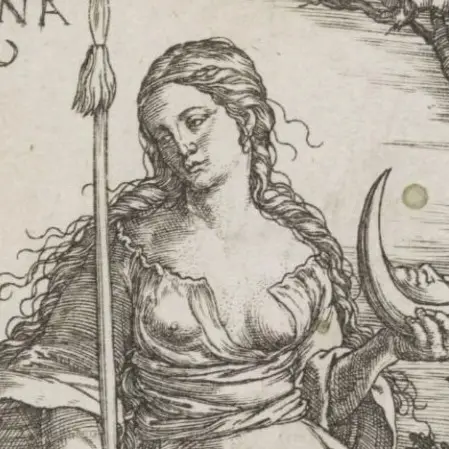
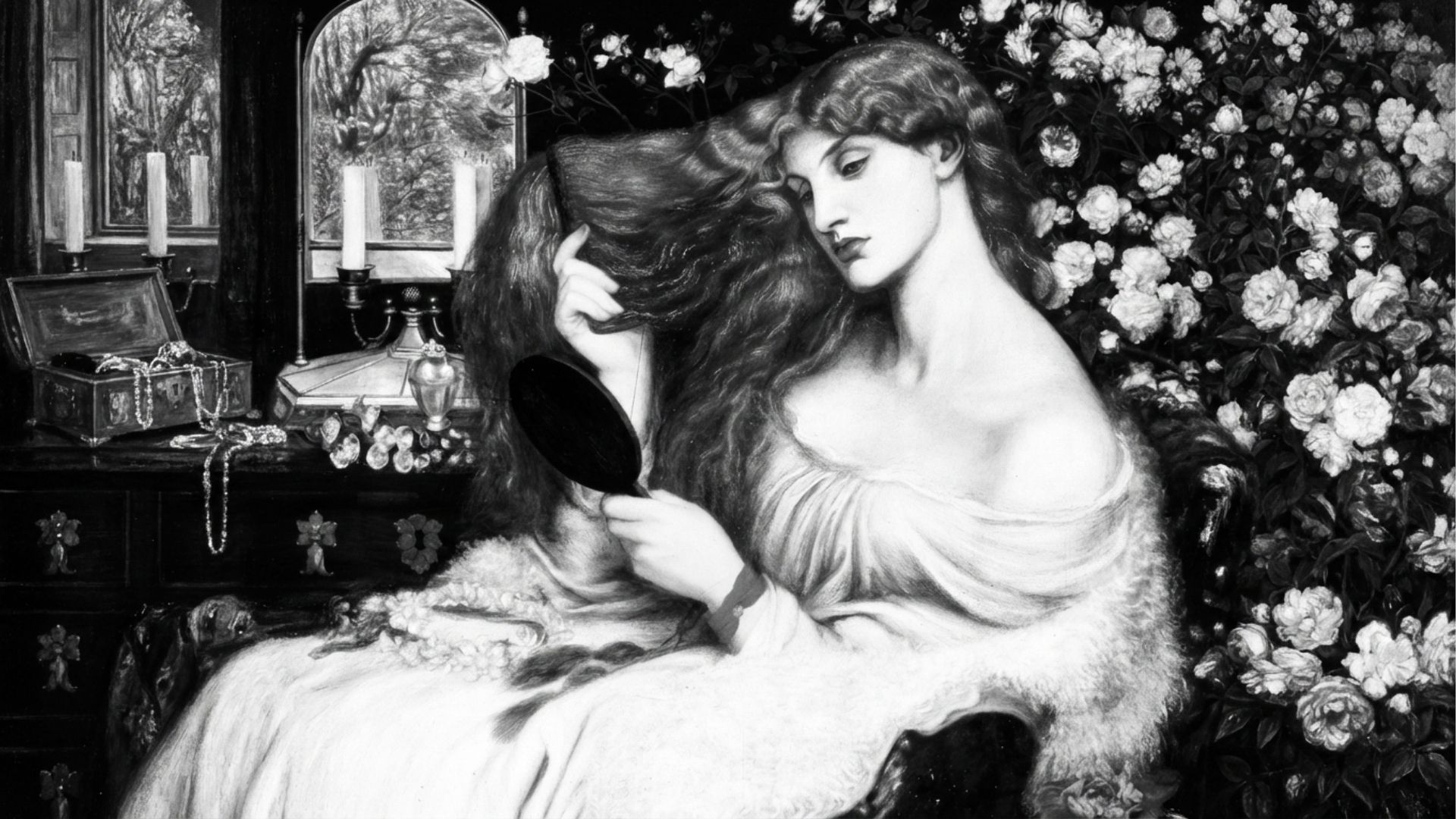
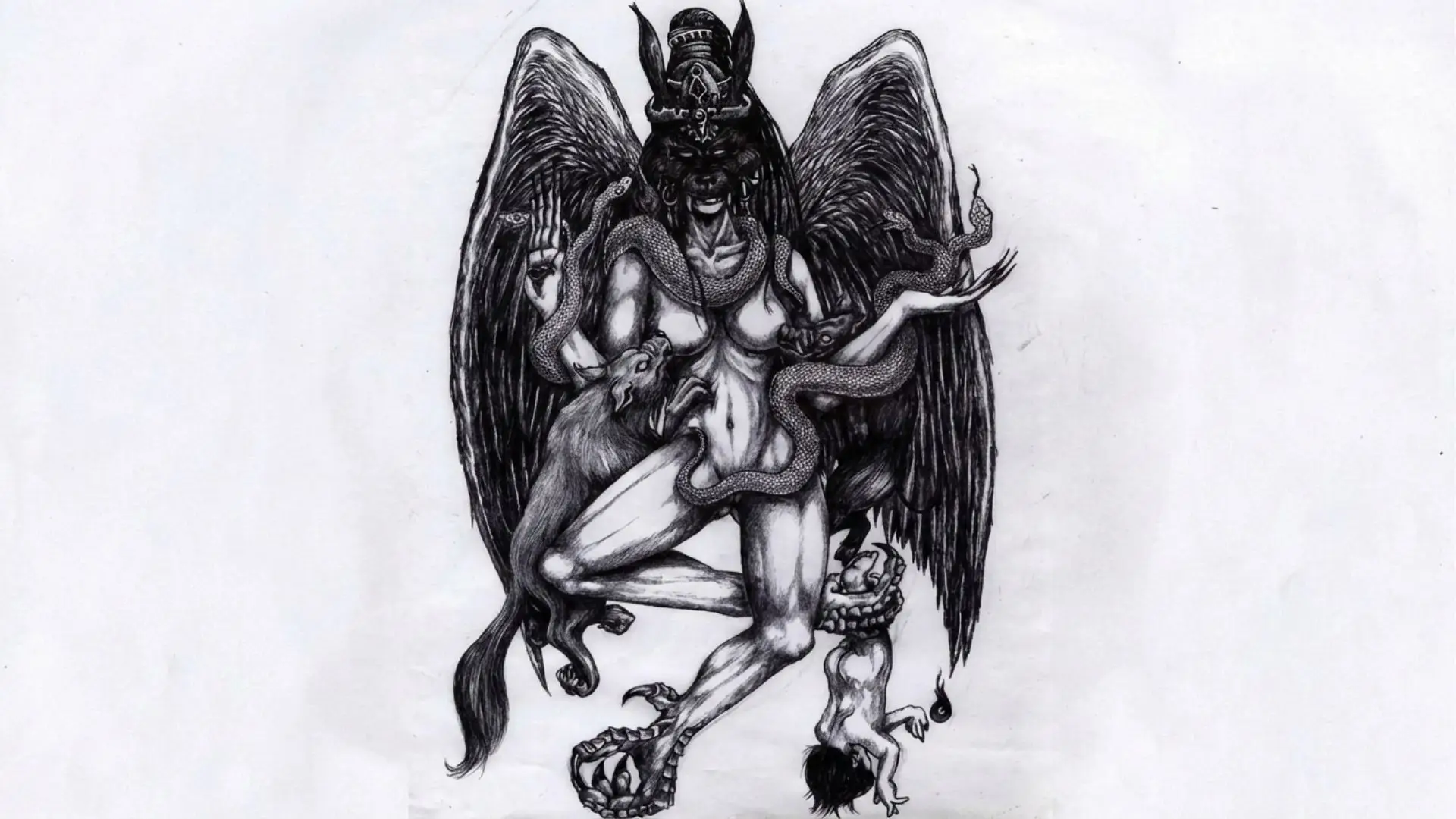
When it comes to Goetic spirits, it isnt at all uncommon to find entities that possessed divine feminine origins before they were systematically transformed into the masculine versions we recognize today.
Duke Bune is one such example of this cultural shift, originally mirroring ancient feminine serpent currents before being cataloged as a male Duke of the infernal realm.
Another spirit who underwent a similar, profound transformation is Duke Astaroth. Heres how the change began:
It begins with the Sumerian goddess Inanna, who later became the Babylonian deity Ishtar. Historians and occult scholars widely recognize Ishtar as Astaroths primary ancestor due to their shared attributes and traceable etymological lineage.
Ishtar was known as the Queen of Heaven who governed two contradictory spheres: love and fertility and warfare. Worship of the goddess would eventually spread westward to the Phoenicians and Canaanites. From here, her name was adapted locally and became ‘Ashtart (later Latinized or Hellenized as Astarte).
In Canaanite mythology, ‘Ashtart was a protector deity who was associated with sovereignty, horses, and the sea. She was also a supreme symbol of feminine power.
Astaroth was first mentioned in the Hebrew Bible, not as the name of an infernal entity, but as a feminine plural noun used to describe pagan idols. The masculine version was Baalim.
How did this happen? Well, when the Hebrew scribes began to compile the Old Testament, many of them had biases against the neighboring religions. So, as a means of bastardizing the name of the Canaanite goddess Ashtart, they took the consonants of her name and combined it with the word Bosheth, meaning abomination or shame.
Centuries later, the classical Hebrew texts were translated into Greek (the Septuagint) and Latin (the Vulgate). However, the scribes often lacked a deeper understanding of Near Eastern linguistic nuances such as plurals. This led to them misreading the Hebrew texts, sometimes leading to the creation of a new, distinct entity.
For example:
By the time the Pseudomonarchia Daemonum was published, followed by the Ars Goetia, Astaroth’s transformation was complete.
Astaroth maintains the high rank of Duke across virtually all major grimoires, the Ars Goetia being considered the standard for most practitioners.
However, there are other texts such as The Grand Grimoire (Red Dragon) where his role is elevated to Grand Duke of Hell. In this book, he is said to form a powerful ruling trinity alongside Lucifer (Emperor) and Beelzebub (Prince).
Duke Astaroth has one of the largest numbers of spirits under his command. Their role follows his office, which is primarily administrative, academic, and advisory. As such, they are composed of scribes, record-keepers, architects, and instructors.
This distinguishes them from warrior legions, often led by combat-focused spirits such as Marquis Andras (brawls/discord), Duke Agaliarept (military strategy and law enforcement), or Duke Eligos (combat strategy). Compared to them, Astaroth represents a calmer yet constructive force, which is in alignment with his Earth element and Venusian intellect.

How did a ‘foul-smelling entity’ become one of the most revered teachers of hidden wisdom in modern practice? Get to know Duke Astaroths different aspects across historical and modern sources.
In his book, Johann Weyer described Astaroth as a great and strong Duke. He is said to manifest in the form of a “foul angel” who sits upon an infernal dragon and holds a viper in his right hand.
The text also warns conjurers to never allow Astaroth to get too close because of his incredibly noxious breath. To protect against this, the conjurer must wear a ring of silver and hold it up before their face to filter the odor. Silver is a metal traditionally associated with purity, psychic defense, and was believed to counteract miasma.
Weyer’s emphasis on Astaroth’s “foul breath” is significant in this case. In 16th-century spiritual warfare, a spirit’s odor was a reflection of their moral rot. The fouler they smelled, the more morally decayed they were said to be.
The Ars Goetia mirrors much of Weyer’s description and ranks Astaroth as the 29th spirit of the Infernal Hierarchy. It also places significance on the Duke’s ability to give true answers of things past, present, and those yet to pass.
He is said to be capable of declaring how the spirits fell during the war in Heaven, including the reason for his own fall. Some medieval scholars saw this as a level of self-awareness not common among other Goetic spirits.
His intelligence isnt limited to that alone, however. Duke Astaroth is also known to be a teacher of all liberal sciences, including grammar, arithmetic, logic, rhetoric, geometry, music, and astronomy.
S. Connollys writings introduce a total shift in how Duke Astaroths energy is interpreted. She moves away from the monsterization of infernal spirits caused by the medieval church and approaches them as beings of divine intelligence instead.
One of the most notable changes is how she views Astaroths “foul breath”. Instead of being taken literally, his foul breath is said to represent the intense nature of his energy and how it can physically affect a practitioner who is unprepared for it.
Demonolatry reframes Astaroth as a spirit of deep introspection. He is sought by practitioners for guidance in matters of career, practical skills, and finding inner balance or clarity.
Michael W. Ford’s take on Astaroth deviates greatly from the rest because he treats the Duke as a manifestation of the ancient goddess Ishtar/Astarte blended with the Draconian current.
He uses the concept of Deific Masks or the idea that ancient gods don’t die, they simply put on a different cultural mask across time. Essentially, he suggests that Astaroth is the mask worn by Ishtar/Astarte as she passes through Western demonology.
Think of the “mask” as the spirit’s cultural face, name, symbols, and myths that humans have assigned to it. This will vary over time as the spirit moves through the years as different generations and cultures will interpret them in a way that suits their perspective.
As for the spirit itself, Ford suggests that the actual power behind the mask is a raw and formless cosmic force within human consciousness. For example, our instinct for survival or desire for power.
This energy cannot be easily interacted with, so Deific Masks are used to enable us to tap into that power and channel it. Those who follow the Luciferian path work with Astaroth to balance the masculine forces (logic, structure, boundaries) with the feminine forces (intuition, passion, and creation) within their psyche.
Astaroths core strengths lie in finding hidden truths, offering strategic insight, and assistance with practical skill development; all of which are key to personal growth.
Here’s a quick summary of his powers and abilities:
Goetic sigils were traditionally used to bind and command infernal spirits. In modern practice, however, they are used as mediums for channeling a spirit’s energy. These sigils are distinct and each represents certain aspects of an entity’s identity. Here’s what you can learn about Astaroth through his seal.

During invocation, his sigil serves as a focal point for meditation, a lamen, and as a map to learning more about his energy and influence. Familiarizing yourself with the symbolism within its design shows both sincerity and a willingness to learn.
One of the most interesting things about Goetic spirits is that none of them exists in a vacuum. Their offices and energies often overlap, allowing practitioners to work with more than one of them harmoniously.
Here are some examples of spirits who are associated with Duke Astaroth:
In The Grand Grimoire and The Grimorium Verum, you’ll find the Infernal Trinity or the absolute peak of power in their version of the hierarchy outlined in the Ars Goetia. This trinity is composed of: Lucifer, Beelzebub, and Astaroth.
Within this three-spirit ruling system, each of them has a specific role to play.

Working with infernal spirits can be a very rewarding experience for any practitioner. However, many make the mistake of either being too demanding or too desperate when it comes to their petitions.
To help you get off on the right foot with Astaroth, here are some things to take note of:
When approaching Astaroth, forget the theatrics. Instead, focus on calming your mind and organizing your thoughts.
Some questions to ask yourself:
Write everything down and try to get as specific as you can. Some practitioners keep a journal dedicated to him, which they fill with their questions or petitions and the ways he has helped them accomplish each one.
Lastly, when reaching out, make sure you also use Astaroths primary enn: Tasa Alora Foren Astaroth.
Beyond decorations, an altar should be clean and free of clutter. It should also reflect the spirit youre communicating with. For Astaroth, here are some correspondences you may want to include on his altar:
Early grimoires described Astaroth’s energy as overwhelming or foul, so this is what you may come to expect as a beginner. However, he doesn’t always manifest in such a manner.
Look for these subtle shifts in your environment:
You need to be ready for total, brutal honesty. He will tell you things as they are; especially if you’re making lazy or poor strategic choices. He will make these flaws so painfully apparent that you’ll have no choice but to fix them.
Dont expect him to magically drop what you need on your lap. What you’ll get is solid discipline, focus, and the opportunities required for you to achieve your goals. It won’t be easy, but as we’ve said: the rewards can be significant and long-term if you stick to his advice.
Become A Living God Forum:
Reddit: