Tracing a spirit’s name back through history, especially if they have ancient origins, is often difficult detective work. Just imagine a spirit’s name changing each time a medieval scribe copied it into a new book; possibly adding or removing certain parts of it in the process. We’ve seen examples of it in spirits such as Duke Focalor and Duke Zepar.
This is also what happened to Valefor’s name over the centuries. So, to better understand him, tracing its etymology is key.
In some of the oldest texts where he is mentioned, Duke Valefor’s name was spelled Malephar or Malaphar. This comes from the Latin word malus, which means “bad” or “evil.” You can still find this root word in use today; think of malpractice (doing a bad job) or malevolent (harboring ill-will).
When his name was written using this spelling, it was a very literal take on his medieval job description: a spirit who is deceptive and shady. During this period, he was known for being a trickster as well.
The shift from Malephar/Malaphar happened through a scribal mistake caused by similarities in how certain letters were pronounced. In Late Latin, Vulgar Latin, and early Romance languages (like Italian and French), the sounds for B, V, and a soft M often blurred into one another. In this case, a scribe likely heard a “V” sound where there was originally an “M,” and wrote the name down exactly as it sounded to them.
This was something that happened quite often, but this seemingly small change can completely flip the identity of a spirit. Such was the case with Valefor.
With his name now spelled with a V, it aligns more with the Latin word valere, which means powerful or strong. This is the same root used in words such as valiant (brave) and valor.
Written in this way, his name now highlights his rank as a mighty Duke and transformed his reputation from that of a deceptive trickster to that of a spirit known for his strength and loyalty to those who summon them.
Some scholars have interpreted this paradox as two sides of the same spirit. It shows how he can be a powerful protector when approached properly, but deceitful when disrespected.
In old occult texts, spirits were often organized in a way that resembled a military hierarchy or a royal court. The Ars Goetia is a good example of the latter, where you’ll find kings, dukes, and so on.
Within this hierarchy, Duke Valefor holds a high-ranking position with a legion (army) to match his title.
Many occult practitioners see the Ars Goetia as the standard when it comes to learning about infernal spirits. In it, Valefor is listed as the 6th spirit and is given the title of Duke.
This means that in the spirit world, he is recognized as a major political player who holds a certain degree of influence and power. Because he is a Duke, he is also traditionally associated with the planet Venus.
Duke Valefor is classified as a daytime spirit. In traditional practice, this means he is most active and responsive during the day instead of at night. So, if you seek his assistance, it helps to time your invocation accordingly.
At first glance, 10 legions may seem relatively small compared to other spirits of the same rank, but this doesn’t mean you should disregard the power he holds. While he may not be the loudest battlefield commander, he is said to run a highly specialized and tight-knit crew of spirits loyal to him alone.
Valefor’s main job description in the old texts is quite unique. He is described as a “good familiar” who becomes fiercely loyal to the person who manages to summon them. However, it comes with a catch: he tempts people into stealing.
This is why, historically, he was viewed as the patron spirit for pickpockets, thieves, and outlaws. Duke Valefor was thought of as the force that gave them clever ideas and the nerve to steal things, while also keeping them hidden to not get caught.
Modern interpretations see him differently, however. Today’s practitioners believe that his being a “thief” was nothing more than a metaphor. Instead, they ask the Duke’s help for stealing back lost time, securing hidden knowledge, and reclaiming their spiritual energy.
Of course, some also tap into that “old magic” he was known for and ask for his protection against actual thieves.

Despite the significant shift in both the spelling and meaning of his name, Duke Valefor’s visual descriptions don’t change much between older and modern texts. If there’s one major transformation, it’s in how his powers and abilities are interpreted.
Here are some examples:
Written by a physician named Johann Weyer, this is one of the earliest official profiles of Valefor (spelled as Valefar or Malaphar in the text). It was meant to expose the delusions of witch-hunting but ended up serving as a blueprint for later texts, such as the Ars Goetia.
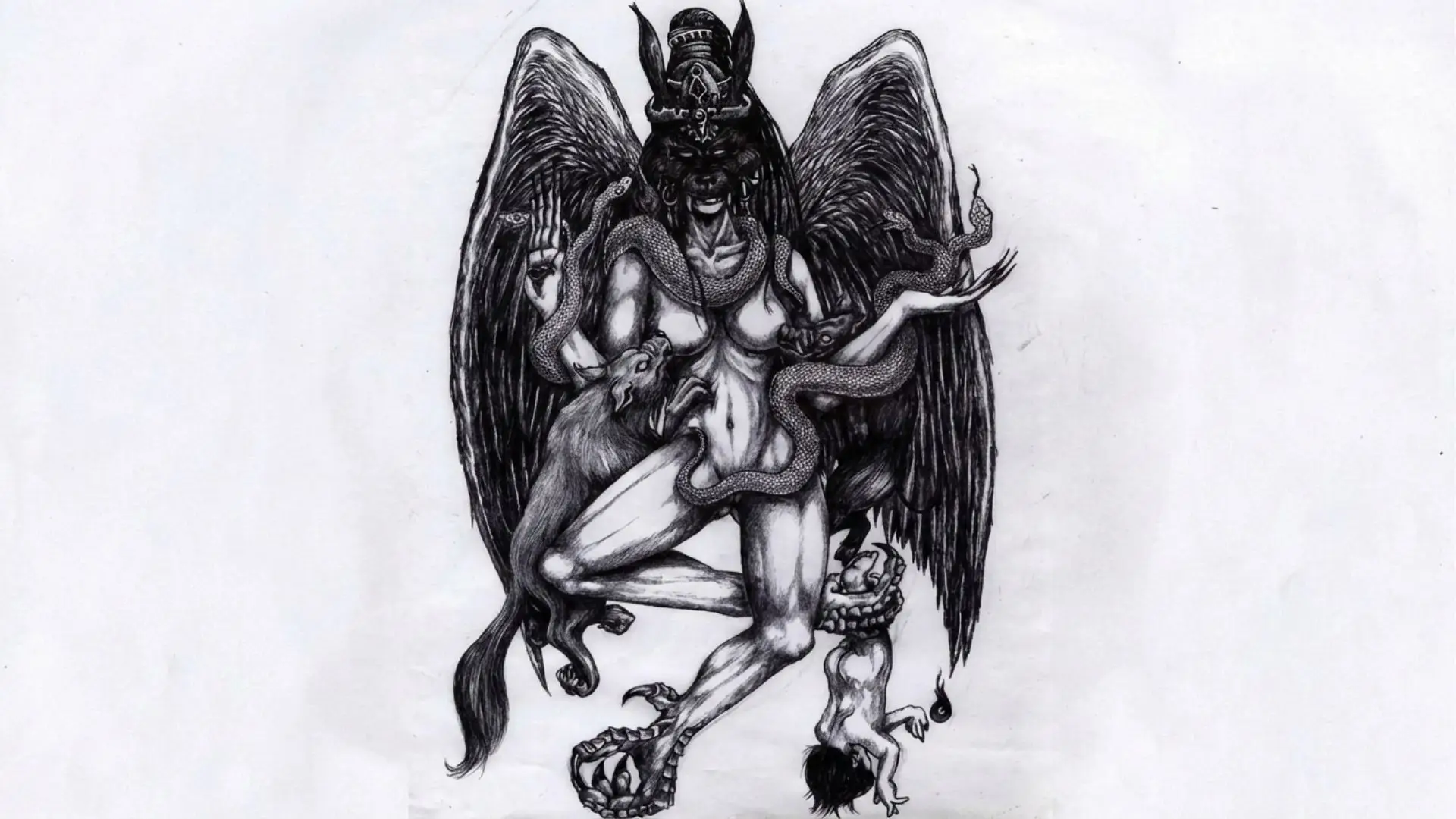
Weyer wrote that Valefor manifests as a leopard or a lion with the head of a human thief. He also doesn’t arrive quietly, but enters with a bellowing roar.
Valefar, alias Malephar [*Malaphar], is a strong duke, comming foorth in the shape of a lion, and the head of a theefe [or “barking”], he is verie familiar with them to whom he maketh himself acquainted, till he hath brought them to the gallowes, and ruleth ten legions.
In traditional symbolism, the lion represented power and pride, while the head of a thief showed that the spirit was cunning and capable of deception.
The text also highlights the contradiction between Valefor being a “good familiar” vs. his tendency to tempt those who summon him into committing theft.
In the Ars Goetia, much of Weyer’s description was retained with some minor tweaks. Since this book was meant to be a manual for traditional ceremonial magicians when it comes to commanding infernal spirits, sigils and ritual steps were added.
The text also warned magicians that the urge to steal brought on by Valefor is contagious. He won’t just tempt the summoner to steal; he’ll also do the same to their friends, family, or even strangers who happen to pass by their house.
“The Sixth Spirit is Valefor. He is a mighty Duke, and appeareth in the shape of a Lion with an Asss Head, bellowing. He is a good Familiar, but tempteth them he is a familiar of to steal. He governeth 10 Legions of Spirits. His Seal is this, which is to be worn, whether thou wilt have him for a Familiar, or not.”
Why is his description changed from the Pseudomonarchia to a donkey’s head in the Ars Goetia? There is no definitive answer to this, though some have suggested that it could be another example of scribal error or a misinterpretation during the process of copying the text from one language to another. A mistake that often leads to changes in a spirits name and imagery.
This error was kept because Church-aligned writers loved adding insulting features to demons. Donkeys, to them, symbolized stubbornness or low status. That said, most modern practitioners view the human-headed lion as the true manifestation of the Duke’s royal and clever nature.
Modern Demonolatry flips many of the beliefs popularized by the Ars Goetia. Instead of trying to command or trap infernal spirits, this practice centers on respectful collaboration with them instead.
In her writing, S. Connolly re-interprets Valefor’s thief persona as something positive. She suggests that it makes him the perfect spiritual bodyguard, because he knows exactly how thieves think. As such, many who follow Demonolatry see him as a protector of wealth and home.
She also notes that Valefor’s ability to create an energetic shield of “glamour” can be used to help practitioners avoid unwanted attention or slip out of a bad situation undetected.
The Luciferian Path sees magick as a means of self-empowerment, spiritual independence, and finding harmony with one’s shadow self. This influences how they interpret Duke Valefor’s energy and identity.
In Ford’s writing, Valefor’s thievery becomes a metaphor for his ability to uncover hidden secrets. He is also viewed as a master sorcerer who can teach practitioners how to project their consciousness into the astral plane to “steal back” their lost wisdom, energy, and spiritual power.
While older texts depicted Valefor as a bad influence, the Luciferian Path looks to him as a teacher who can help people spot hidden opportunities, outsmart any obstacles in their lives, and claim personal power and freedom that society often tries to take away.
Historical and modern practitioners viewed Duke Valefor’s powers and abilities differently. That said, here are some highly specific capabilities that are attributed to him.
This list reflects a more modern view of what he’s capable of, so keep that in mind if you seek his assistance.
To the untrained eye, a demonic sigil may appear as nothing more than a doodle or a piece of calligraphy. However, for practitioners, it serves a much deeper purpose. It helps them call upon and connect with that spirit’s distinct energy.

Each sigil is unique, and its design gives clues as to how a spirit’s energy works.
Valefor’s sigil is easily recognizable thanks to the horizontal loops or stylized knots that dominate its design. Because Valefor is the spirit of thieves and stealth, practitioners see these loops as a representation of catching or binding things that are lost or hidden. It mirrors his most well-known abilities.
Some also use his sigil as part of their meditative practice by inscribing it onto a piece of paper. Many occultists speak of getting into a flow state while doing so, helping them attune their energy to his.
This is also good practice if you’re a beginner, since you will need to place his sigil on the altar you’ll be using during invocation. You don’t need to do it perfectly, but you will need a solid copper medallion (or copper-colored paper) to engrave it on. This will serve as your lamen.
Duke Valefor may hold a unique role within the hierarchy, but he still shares his “workspace” with a few other specific spirits. Here are some examples.
If there’s a spirit in the Ars Goetia who can serve as a direct professional counterpart for Duke Valefor, it would be Count Raum. Known to manifest as a crow, the Count is known for stealing treasures out of Kings’ houses and bringing them to wherever the magician/practitioner commands.
While Valefor is seen as the mastermind who tempts people to commit theft, giving them the cleverness and stealth required to do so, Raum provides the ability to bypass security in order to displace wealth. Combined, they make for an unbeatable team when it comes to acquiring things.
Moving away from thievery, another spirit known for being able to reveal hidden treasures is President Valac. He is known to manifest as a small child with angel wings riding a two-headed dragon.
Many modern practitioners pair them together: Valac is called upon to find a lost asset or opportunity, and Valefor is called upon to secure it or deliver it home safely.
Working with any spirit requires understanding, not just of their nature, but also of the protocols involved in the process. If you’re a beginner, here’s what you need to know about Duke Valefor.
Valefor should not be approached as a tool to commit petty crimes. This is because doing so often invites his secondary trait, which involves allowing practitioners to get caught as a lesson in humility.
Remember, the idea of him being a literal thief is outdated and may be taken as a slight if he is approached with this petition. Instead, ask him for assistance in securing personal sovereignty, resource gathering, or defense.
Spirits appreciate a clean and highly intentional ritual space. What does that look like? Dedicate a specific surface or corner of your workspace to the altar and make sure you cleanse it physically and energetically (incense or other cleansing implements) before setting things up.
Offerings for Valefor:
Other devotional things you can do are to offer public praise of his work and loyalty once the request has been fulfilled.
One of the trickiest parts of communicating with a spirit is knowing when they are present or not. It certainly takes much practice, but there are also certain signs you can stay alert for. Here’s what you can expect from Valefor according to other practitioners.
The Duke is notorious for being direct, but he is polite if treated with respect. He is also known for being a quick worker, but never demand things from him.
It also pays to remember his dual nature; if you ask him for assistance, then he expects that you possess the cunning to back it up. If he finds that you are sloppy or greedy, the likelihood of him stepping back becomes much higher. In such cases, he will allow the natural consequences of your own actions to teach you a much-deserved lesson.
Become A Living God Forum:
Reddit: