When you first start learning about infernal spirits, one of the first things you’ll realize is that their names don’t always have clear etymologies. While some, such as King Bael, can be directly traced to Baal, others like Focalor aren’t always as straightforward.
In many cases, their names have come about due to various reasons. Some happened due to scribes mishearing or wrongly copying a text, or a blending of different languages together. Think of it as a linguistic evolution, which often mirrors that spirit’s transformation throughout the centuries as well.
To better understand Focalor, let’s start with the origin of his name.
Fauces:
Based on how the Duke’s name sounds phonetically, language experts and occult researchers alike often point to possible Latin roots. Particularly, the word fauces, meaning “the throat” or “the jaws”.
Aside from its literal use, the Romans also used the word to describe a narrow pass or a dangerous chasm where water rushes through.
In some ways, this fits with Focalor’s early identity, which revolves around his command of oceanic storms and the sinking of ships.
Focus:
Another interesting Latin root word that is often connected with Focalor is focus, which means “hearth” or “fire”. While this might feel like a contradiction, given that Focalor is associated with water and wind, you’ll find that such paradoxes happen quite a lot when it comes to ancient magic.
There are older traditions where the roaring sound of a violent ocean tempest, brought on by the crashing of waves, was described as “burning”. It might be a mere coincidence of language, but it also places emphasis on how active and intense his energy is.
Have you heard of an anagram? It’s a type of word puzzle where you mix up the letters to form a new name. Some scholars believe that Focalor might be an example of this.
The theory suggests that the Duke is directly related to Rofocale or Lucifuge Rofocale, a major prime minister of the underworld featured in later French Grimoires such as Le Dragon Rouge (The Red Dragon).
In the hidden history of these old texts, names were often intentionally scrambled, written backwards, or inverted to show that a spirit was a different aspect of a grander cosmic force. As such, there are those who believe that Duke Focalor and Lucifuge Rofocale are two “faces” of the same entity.
However, while their names do closely mirror each other, there is no evidence supporting a connection between the two beyond this similarity.
Navigating the different ranks within the infernal hierarchy can feel a bit intimidating at first, but it is important if you wish to understand the spirits better.
In Focalor’s case, he is ranked as a duke with a specific job description assigned to him. However, you should also make note of the fact that the number of his legion varies depending on the text you’re reading.
Here’s what you need to know.
What does it mean to be a Duke within the Goetic Hierarchy? It’s no different from being a real duke. The title represents command and high-ranking authority, but they do answer to someone above them such as a King.
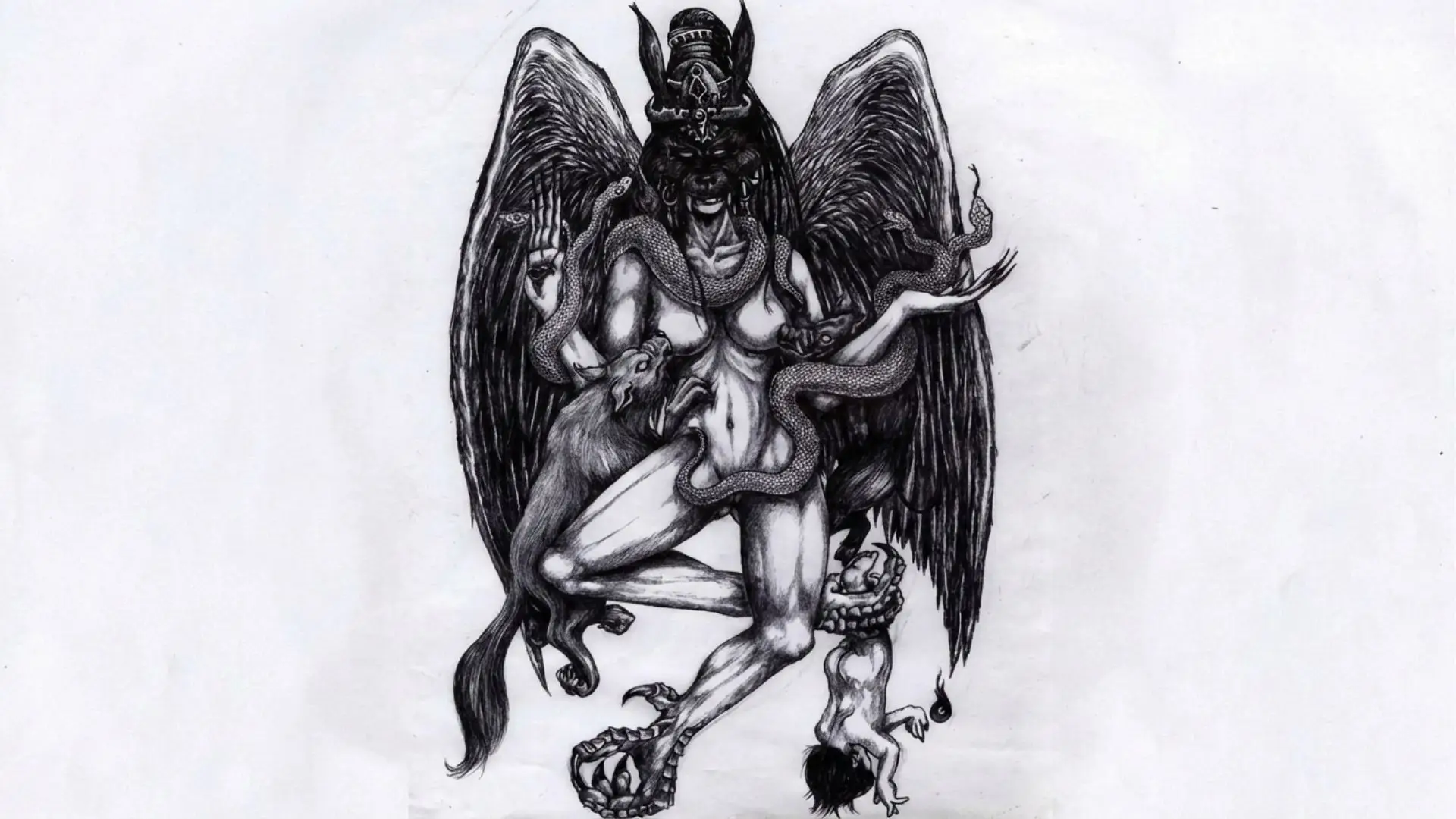
As a Duke, Focalor is known to carry the “heavy and majestic weight of royalty”. According to old texts, he appears as a man bearing the wings of a griffin, an image of a formidable predator that aligns with his energy and nature.
This visualization isn’t merely for intimidation, however. It symbolizes his mastery over the physical world (the sea) and the intellectual (the winds).
The old books say that Focalor’s main job in the universe is to act as a literal force of nature. Think of him as the personification of ocean storms, tidal waves, and the violent winds that come with them.
If you read through the 16th and 17th-century grimoires, you’ll find that his description was often quite dark. He was invoked to destroy warships and sink entire navies, drowning men in the deep sea.
Back then, seafaring was the most dangerous thing a human could do, so any deity or spirit known to control the ocean was both feared and revered.
Given the huge discrepancy between the number of legions he is said to have, one has to wonder how it all came about. Well, it mostly comes down to human error and scribal mistakes.
As you might already know, books were copied entirely by hand. A tired, overworked scribe could’ve easily misread a Roman numeral (confusing III for XXX), or added a zero by accident.
Despite the gap, this doesn’t diminish the power Focalor holds within the hierarchy. He still holds a high rank and commands a highly organized legion, all ready to accomplish tasks for him.

There is a big difference in how classical texts and modern ones viewed infernal spirits. In Focalor’s case, he transforms from being a destructive monster feared by many into a spirit who can help people achieve emotional mastery from within.
John Weyer was the first to catalog Focalor, listing him as a “great duke”. He described him as a man with griffin wings, who would drown sailors by drowning them in the sea. In the Pseudomonarchia Daemonum, Weyer also notes how Focalor was known and called upon to overturn ships of war.
In his book, he also emphasized that Focalor can be cooperative, granted that the conjurer explicitly asks him to harm no one. This is something he willingly consents to.
Another key detail that Weyer wrote about is Focalor’s previous life as a member of the Seventh Throne of the celestial hierarchy before the fall. Also known as the Thrones or Ophanim, he is said to harbor false hope that he would one day return there after 1,000 years of commanding his 3 legions in Hell.
In the Ars Goetia, Focalor is listed as the 41st spirit and much of his description is similar to that of Weyer’s. However, one of the biggest differences is the number of his dominion which is expanded to 30 legions in this text.
The Ars Goetia also leans heavily into his office as a slayer of men, destroyer of warships, and commander of both wind and sea. Despite his great power, the text reiterates his vulnerability to a conjurer’s counter command: that he may not hurt any man or thing if he is commanded to.
He is described as such:
“The Forty-first Spirit is Focalor, or Forcalor, or Furcalor. He is a Mighty Duke and Strong, appearing in the Form of a Man with Gryphons Wings. His Office is to slay Men, and to drown them in the Waters, and to overturn Ships of War, for he hath Power over both Winds and Seas; but he will not hurt any man or thing if he be commanded to the contrary by the Exorcist. He hath hopes to return to the Seventh Throne after 1,000 years. He governeth 30 Legions of Spirits, and his Seal is this…”
Like other spirits in the book, he is given a sigil/seal and a ritual that can be used to invoke him.
Modern Demonolatry completely moves away from fear-based interpretations of infernal spirits. Instead, Connolly and other contemporary practitioners approach spirits like Focalor with respect and reverence.
His “monstrous” nature is stripped away and he is seen as a specialized force for banishing, binding, and emotional balance. While he maintains command over “raging storms”, he is no longer associated with death or destruction in the seas.
Instead, practitioners go to him for assistance when it comes to navigating trauma, intense emotions, and subconscious currents. The storm of one’s psyche, so to speak.
There are certain similarities between how the Luciferian Path and how modern Demonolatry viewed Focalor. Both strip away the “monster” to reveal a divine intelligence, capable of teaching and assisting those who seek them.
In Ford’s writing, he suggested that Focalor’s control over winds and seas represented the practitioner’s power over their own mind (air/intellect) and their subconscious desires (water/emotions).
Instead, the Duke’s destructive power is channeled inward, dissolving any stagnant ego structures and removing any psychic blockages preventing a person from achieving self-creation.
To better understand Focalor’s powers and abilities, we must look at both the classical and modern traits attributed to him.
Duke Focalor’s sigil features a lot of sharp geometric lines and classic Goetic designs, though it is more “minimalist” compared to others. This sigil, aside from being his ‘calling card,’ also works as an anchor, tying his airy-aquatic energy into the physical plane.

Here are some key points to keep in mind about his sigil:
Because his energy can feel immense, sometimes cold, having his sigil can help you focus your intent better.
Infernal spirits are rarely isolated entities. They belong to a vast cosmic network and often overlap with other figures of myth and folklore. Here are some examples of entities connected with Focalor.
Lucifuge Rofocale is considered to be the Prime Minister of the Underworld within the hierarchy of the Grand Grimoire (Red Dragon). His name literally means “he who flees the light” and he is tasked with handling the world’s wealth, its treasures, as well as demonic pacts. In this system, he answers directly to Lucifer himself.
In left-hand philosophies, Lucifuge Rofocale and Focalor are seen as “complementary forces” for working with one’s subconscious. Lucifuge Rofocale governs the deep, dark internal treasures of the earth and the subconscious mind, while Focalor uses that raw, internal energy and expresses it outwardly to clear away obstacles within one’s physical world.
Within the Ars Goetia, there are a few other spiritswho have deep connections with the sea. Duchess Vepar rules over the waters themselves and is known to guide ships safely or make the sea boil. She is also notorious for causing wounds to fester with sea-worms.
Duke Crocell is the gentler one out of the three. He can make the sound of rushing water appear out of nowhere, causing confusion, and he can also warm up even freezing water if asked.
In classical lore, before the great rebellion in heaven, Focalor was once an angel who belonged to a high-ranking choir called The Thrones. They were beings of light and were described to manifest as massive burning wheels covered in eyes.
The Thrones were tasked to carry the throne of God and maintain balance, cosmic order, justice, and the physical laws of the universe, such as gravity and time.
Some texts suggest that Focalor retained many attributes from when he was part of the Thrones. He isn’t a chaotic spirit, but operates in a cold and precise manner.
If you’re thinking of approaching Duke Focalor for mentorship, there are certain important things to keep in mind. Aside from maintaining a calm and clear mind, respect is always part of the basic protocol.
Remember, how you speak to him and how you prepare your space matters.
Always choose a quiet area of your home or room to use as an altar space. In this case, one that faces West (the traditional direction of water) or North would be good. Aside from physical cleanliness, cleanse your space energetically with sea salt or sound as well.
Your altar need not be perfect (or expensive!) as long as it aligns with Focalors energy. To do this, always have his known correspondences available.
Infernal spirits aren’t always known to manifest physically, but there are ways of knowing if they are present. Here are some of the things you should pay attention to:
Duke Focalor is not a warm or overly talkative spirit. His energy has weight, being a vast and ancient entity. Some practitioners have described him as clinical and somewhat detached, but do not take this as rejection.
He expects practitioners to be direct and clear about their intentions. Whether you seek help with clearing emotional blocks or binding a situation or person, you can expect swift and efficient responses from him. Just make sure you’re prepared to accept the sometimes stark realizations that will cut through your personal illusions.
Become A Living God Forum:
Reddit: